
A Never-Ending Nightmare


What happened at Sapphire in Orlando? SAP CEO Christian Klein took the keynote stage on Tuesday, May 12, and tried to convince the SAP community of his very personal vision for AI. Using his new favorite word, „autonomous,“ he painted a picture of a new SAP—Christof Kerkmann, an editor at the German newspaper Handelsblatt, was in Orlando and reported, among other things: „The capital market, too, does not seem entirely convinced. SAP stock reacted to the major product showcase on Thursday and Friday with only slight gains. The market environment was challenging, and other software manufacturers also posted losses. The momentum wasn’t enough to break away significantly from the negative trend.“
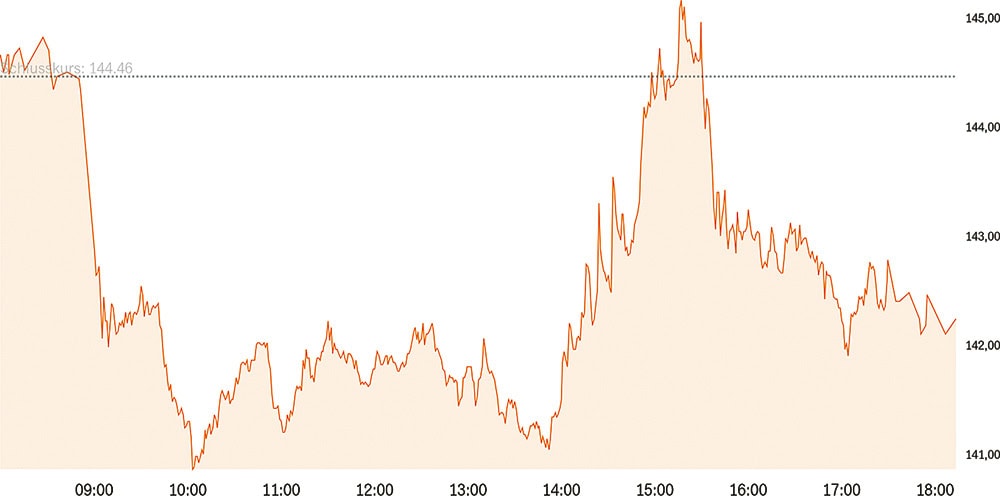
Following cloud computing, Christian Klein is attempting to use AI to bring SAP’s stock price back to its all-time high of 280 euros. The stock price trend on the day of Christian Klein’s keynote in Orlando is revealing, as shown in the chart: Expectations were high at the start of the SAP keynote on Tuesday at 2:30 p.m. European time. The tension mounted, but after half an hour, it became clear: Aside from empty buzzwords like „autonomous“ and, of course, AI, there wasn’t much else to report. The stock price slipped again, to a level that is almost exactly half of its former all-time high.
Under the leadership of CEO Christian Klein, the Walldorf-based software giant SAP is thus currently undergoing a downright frantic and panicked strategic shift from the cloud to AI—a move that, upon closer inspection, raises profound doubts about the company’s technical stability. Driven by the financial markets„ existential fear that agile AI giants like OpenAI or Anthropic could render the traditional, manual ERP business model, Klein has already buried the “North Star Architecture„ of the SAP Business Suite—which had been celebrated so enthusiastically just a year earlier—at the Sapphire customer conference in Orlando. Replacing it is the new, heavily stock-market-driven vision of the so-called “Autonomous Enterprise,” with which Christian Klein aims to appease investors’ massive pressure for innovation and prove that SAP will not be reduced to a mere data provider in the age of generative AI.
At the Sapphire in-house exhibition, the SAP CEO presented this autonomous company as a revolutionary vision in which digital assistants and agents will, in the future, handle complex business processes independently in a matter of days rather than weeks.
To accelerate this development, Klein not only announced the immediate activation of more than twenty AI assistants in Orlando, but also established a development fund of 100 million euros designed to provide financial support to customers and partners for the customization and new development of AI agents via the free development environment Joule Studio.
However, the most controversial—and at the same time most important—announcement for the SAP community at Sapphire was Klein’s fundamental strategic concession: Following massive protests from user groups, he scrapped his rigid “cloud-only” dogma and admitted that future AI innovations would now also be made available to S/4 Onon-prem customers via connectors, which represents a fundamental departure from the previous policy of coercion.
In Orlando, CEO Christian Klein opened his keynote address with the vague promise of salvation, „The Beginning of Better,“ to rally the assembled IT world behind what appeared to be a new era of enterprise software. Upon closer inspection, however, this highly polished slogan masks the Walldorf-based corporation’s raw, existential fear of being marginalized by agile AI startups and tech giants in the fast-paced age of artificial intelligence.

 Deutsch
  English
  Español
  Français