From Concerns About Losses to Structured Transformation: E3 Roundtable on SAP Clean Core




For many SAP customer companies, SAP Clean Core is not merely a technical issue; rather, it touches on key aspects of their IT autonomy, the security of their investments, and the process differentiation they have built up over the years. Many existing SAP customers have adapted their systems over decades to meet industry-specific requirements, individual business processes, and established organizational structures. These customizations often contain not only technical code but also valuable process knowledge. Consequently, there is significant concern that streamlining the ERP core will call into question precisely those customizations that have thus far contributed to the company’s performance and competitive edge.
The real challenge, however, lies less in the fact that Clean Core inevitably results in some irretrievable loss. Rather, it stems from the assessment that the reassessment and Clean Core-compliant transformation of historically accumulated customizations entails significant costs, effort, and organizational decisions. Particularly in complex brownfield scenarios, the question arises as to what is actually still needed, what can be eliminated, and which enhancements continue to make a substantial contribution to differentiation or competitive advantages.
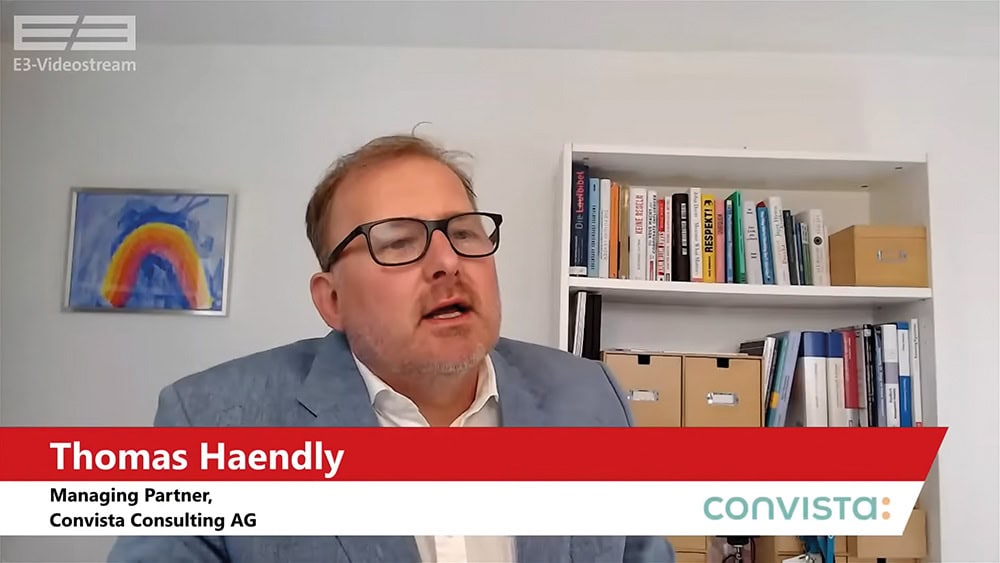
Thomas Haendly of SAP partner Convista views Clean Core as a pragmatic architectural approach. Haendly is a managing partner at Convista, and he deliberately tones down the intensity of this discussion. From his perspective, Clean Core is not a dogmatic program of cutbacks, but rather a necessary architectural principle for making SAP systems easier to maintain, more upgradeable, and more capable of innovation in the long term. The key is not the blanket elimination of customization, but rather its systematic evaluation and controlled transition into a modern SAP architecture.
Review, Prioritize, Transform
The first step is a thorough assessment. IT decision-makers and SAP managers must systematically analyze the existing custom code: Which extensions are technically critical, which violate Clean Core principles, which are actually still in use, and which are based on outdated business assumptions? Tools such as the ABAP Test Cockpit can help identify technical issues and classify non-compliant in-house developments.
Technical analysis must be followed by a business-driven prioritization. Not every in-house development justifies a complex transformation. That is why the Clean Core strategy always involves asking what a company truly needs, which functions can be replaced by standard SAP features or modern platform services, and which customizations actually ensure a sustainable competitive advantage. Only once this assessment is complete can a well-informed decision be made regarding which extensions should be newly developed, refactored, outsourced, or decommissioned.
For the extensions that pass this review, the appropriate transformation path must then be defined. Depending on business significance, technical complexity, and the strategic target architecture, this may involve the use of approved APIs, implementation on the Business Technology Platform (SAP BTP) or the Business AI Platform (BAIP), the use of modern programming models such as RAP or CAP, or a phased replacement of existing logic. The timeline is equally important: Not everything needs to be transformed immediately, but critical dependencies, upcoming release changes, and innovation projects must be incorporated into a realistic roadmap.
Thomas Haendly emphasizes that economic risks must also be taken into account: Moving customer-specific functions to platforms such as SAP BTP or BAIP can result in additional operating and subscription costs and create new dependencies. A viable Clean Core roadmap should therefore factor these effects into architecture, sourcing, and roadmap decisions from the very beginning.
Innovation as a Catalyst
This is precisely where innovative approaches become increasingly important. Solutions from Nova Intelligence or conduct.ai can help systematically analyze existing custom code, historical process knowledge, and relevant data sets, evaluate them from a technical perspective, and migrate them in a controlled manner to a new Clean Core architecture. AI-powered and automated processes make it possible to reduce the effort required for transformation, improve the basis for decision-making, and strengthen the business case for Clean Core.
Convista combines this technical approach with methodological consulting, change management, and training. This is because Clean Core is not merely a technical refactoring project; it also transforms roles, development models, and decision-making processes within IT organizations. ABAP developers, architects, and business units must learn to consistently design extensions in accordance with approved interfaces, modern programming models, and clear governance principles.
Clean Core as the Foundation for AI
Thomas Haendly knows that Clean Core is also an essential prerequisite for reliably implementing SAP’s vision of a more automated and AI-powered enterprise. Agentic AI, Business AI, SAP Knowledge Graph, Business Data Cloud, and specialized models for structured enterprise data require stable, standardized, and governance-compliant system landscapes. The more cleanly processes, data, extensions, and integrations are structured, the better AI components can be integrated into business processes in a trustworthy, scalable, and upgradeable manner.
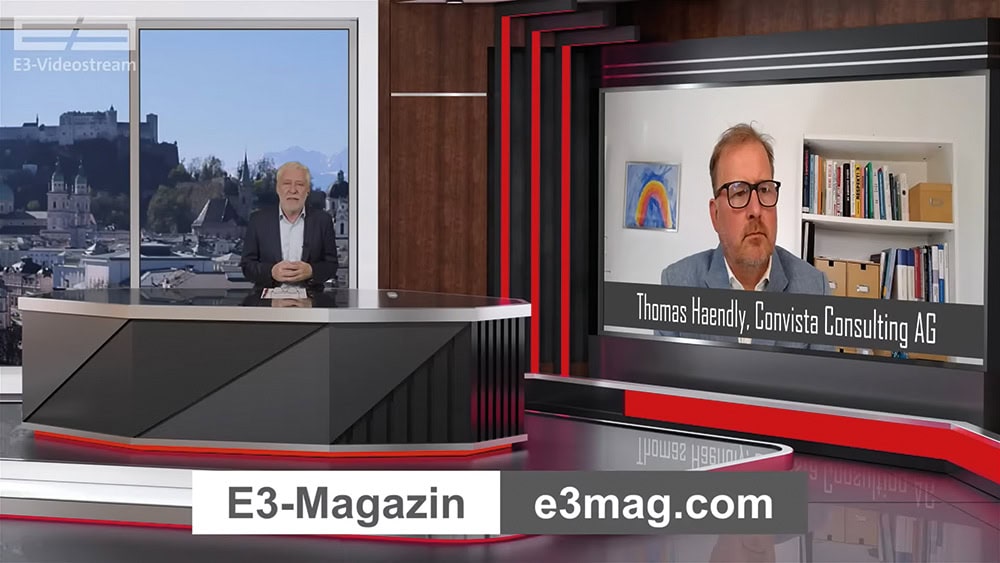
Thomas Haendly and Convista therefore recommend that Clean Core not be viewed as a one-time cleanup project or as a mere SAP requirement, but rather as a managed transformation of a company’s own ERP architecture. IT decision-makers and SAP managers should make existing custom code transparent, assess its business value, set priorities, and then define the appropriate transformation path for the relevant extensions. Thomas Haendly is convinced that a structured Clean Core modernization approach can be found for every customer situation—one that preserves individual differentiation, reduces technical debt, and lays the foundation for future innovations and added value. (pmf)
Click here to watch the recording:
Information about our roundtable on December 9 at 11:00 a.m. is available here:


 Deutsch
 English
 Español
 Français