One Day, One Week, a Sound Decision: Digital Transformation and the IT Industry in Small and Medium-Sized Businesses

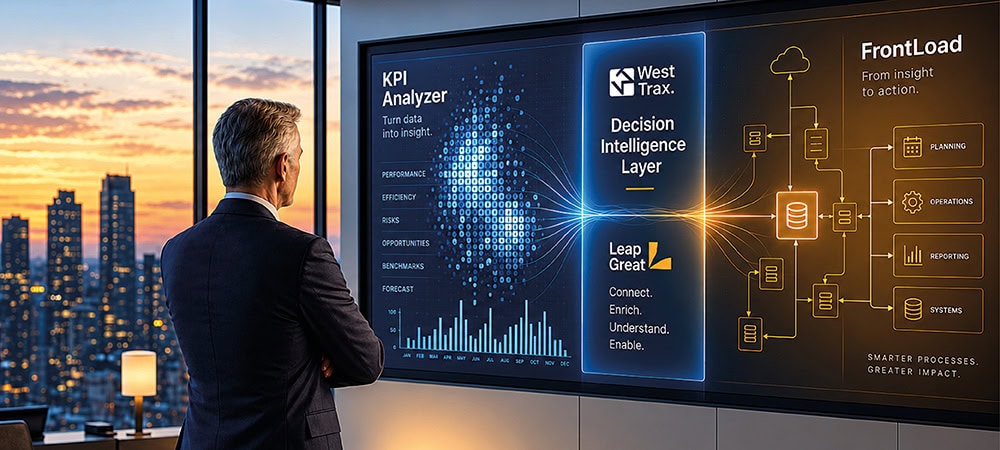


When SAP ECC reaches end-of-maintenance, SAP support ends. Doing nothing becomes risky and expensive. Anyone who wants to continue operating a supported system must begin a transformation. Those making this decision are usually unaware of two key factors: the condition of the existing system and the actual behavior of the future system. The current state can be quickly assessed today, and the target state can be established within a few days.
Numbers that no one has
One takes a day, the other a week. Both can thus be available before the investment decision is made, rather than after. When management approves the S/4 transformation, almost everything is quantified in the proposal: budget, duration, milestones, and expected outcomes. However, two key factors are often missing, and the success of the project hinges on them. If these fundamentals are lacking, unexpected issues arise later on, which can lead to schedule delays, cost overruns, and project escalations.
First: No one can say with any certainty what the existing system actually does. Which processes are actually being used, how intensively, which in-house developments are necessary, and which have simply evolved over time? The answers are often based on workshops, interviews, and documentation, rather than on a systematic analysis of actual usage.
West Trax
- Over 2,000 SAP systems analyzed across 15 industries, more than 350 customers
- 25 years in the market, independent of implementation, licensing, and infrastructure businesses
- 30 minutes of work at the customer's site, read-only access
- 1–2 hours of analysis; results available the next day
- More than 50 percent of in-house development projects often go unused
- Across all industries, from single-system implementations to multi-country rollouts
Second: No one can demonstrate at the outset exactly how the future system will work. Whether the planned processes will actually run with the organization’s own data and business transactions often only becomes clear months later, by which time making changes has become costly. Greenfield, brownfield, or bluefield; public or private cloud: The fundamental decisions are usually made before these two factors are known. Meanwhile, business continues as usual. Customers, facilities, contracts, and legal obligations do not disappear with the transformation. During the migration, unnecessary baggage may be carried over, and on a greenfield project, necessary functions may be overlooked. Therefore, anyone who wants to leave the legacy system behind first needs transparency regarding its actual usage.
Day 1: Assessing the Current Situation
The status of a mature SAP system doesn't need to be interpreted; it can be measured by its actual usage. Every transaction, every Fiori app, and every custom-developed object leaves a trail indicating whether it is being used and by whom. No workshops are needed for this.
West Trax has been doing this for 25 years, across more than 2,000 systems for over 350 customers. The data extraction is a read-only process and takes about 30 minutes; the analysis takes one to two hours. The results are available the next day: a usage overview across six hierarchical levels, showing which functions are used in which plants and by how many users. The more costly aspect also becomes apparent: more than half of the in-house development portfolio is never accessed, and only about 15 percent is used regularly.
It’s the benchmark that makes the difference. The findings are compared against an industry benchmark derived from an analysis of over 2,000 systems. Based on this, Bosch Manufacturing Solutions was able to decommission approximately 700 programs in the legacy system before implementation began.
West Trax neither implements nor sells licenses or infrastructure. The results provide an independent and reliable factual basis for management, supervisory boards, and audits.
Building for the Future
Even those who know what the existing system actually uses still don’t know the answer to the second crucial question: What will this scope look like in the future S/4 system? This is where LeapGreat comes in with its FrontLoad approach. Instead of spending months describing the target system, it is built. Based on the enterprise scope, requirements, business data, and insights from the usage analysis, a fully functional S/4 system—configured, integrated, documented, and tested—is created within a week. This isn’t a demonstration with sample data, but a system that reflects the company’s own business transactions and data. Business units can experience their future target system firsthand, rather than just imagining it in workshops.
LeapGreat
- FrontLoad Approach: A fully operational S/4 system with its own data after one week
- Hundreds of preconfigured Clean Core end-to-end processes for public and private cloud ERP
- Configuration based on actual usage rather than a template catalog
- Digital twin with a business user cockpit, guided navigation, and interactive user documentation
- Original Authors of the SAP Best Practices Baseline for the Manufacturing Industry
- Refinement in short cycles on the running system
This is made possible by a preconfigured Clean Core with hundreds of end-to-end processes and the automation of the setup work. The target configuration is automatically derived based on measured usage and requirements. Tasks that would otherwise tie up resources for the first few months—such as system setup, configuration, data migration, and testing—are carried out according to a reproducible blueprint. A digital twin provides support through guided navigation, interactive documentation, and AI agents. The system is then refined in an agile manner while it is in operation. Domtar Cellulose demonstrates just how effective this approach is: the full scope became tangible within a few weeks, rather than only after months of traditional blueprinting, implementation, and correction phases. What happens between measurement and construction is crucial. The results of the West-Trax analysis are immediately incorporated into the configuration of the target system. Construction is based on what the company actually uses. This reduces a large portion of the traditional fit-gap analysis work. Instead of identifying relevant functions in workshops using demo or sandbox systems, the essential answers are already available within the company’s own development system.
The discussion is shifting from identification to optimization. This changes the role of the business units. They are able to recognize their business processes based on their own data early on in the target system, rather than having to derive them from an abstract model. The time of customer experts is being used more strategically to actually refine the processes.
Investment Decision
The implementation effort becomes clear early on because any deviation from the standard is identified and can be evaluated. The effort estimate is based on measured quantities and an established set of objectives. Budgets and deadlines are built on a more reliable foundation, and the risk of surprises down the road is reduced. Decisions on fundamental issues—such as public or private cloud, greenfield or brownfield—can also be made with greater confidence.
Those who have made conservative decisions out of uncertainty can now compare alternatives based on facts. For shareholders, supervisory boards, and auditors, there is an added benefit: The assessment is conducted by an independent third party, and the target state is not a promise but a system that can be validated before a decision is made. The underlying assumptions become transparent and auditable. West Trax and LeapGreat combine an objective analysis of the current system with the early development of the target system. This allows testing, refinement, change management, and business unit involvement to begin earlier than in a sequential project approach.The question, therefore, is not whether a transformation will succeed. It is whether it was feasible before it began.
(Source: West Trax and LeapGreat)

 Deutsch
 English
 Español
 Français