SAP AI: More Risk Than ERP Value




ERP Risk: SAP Autonomous Enterprise
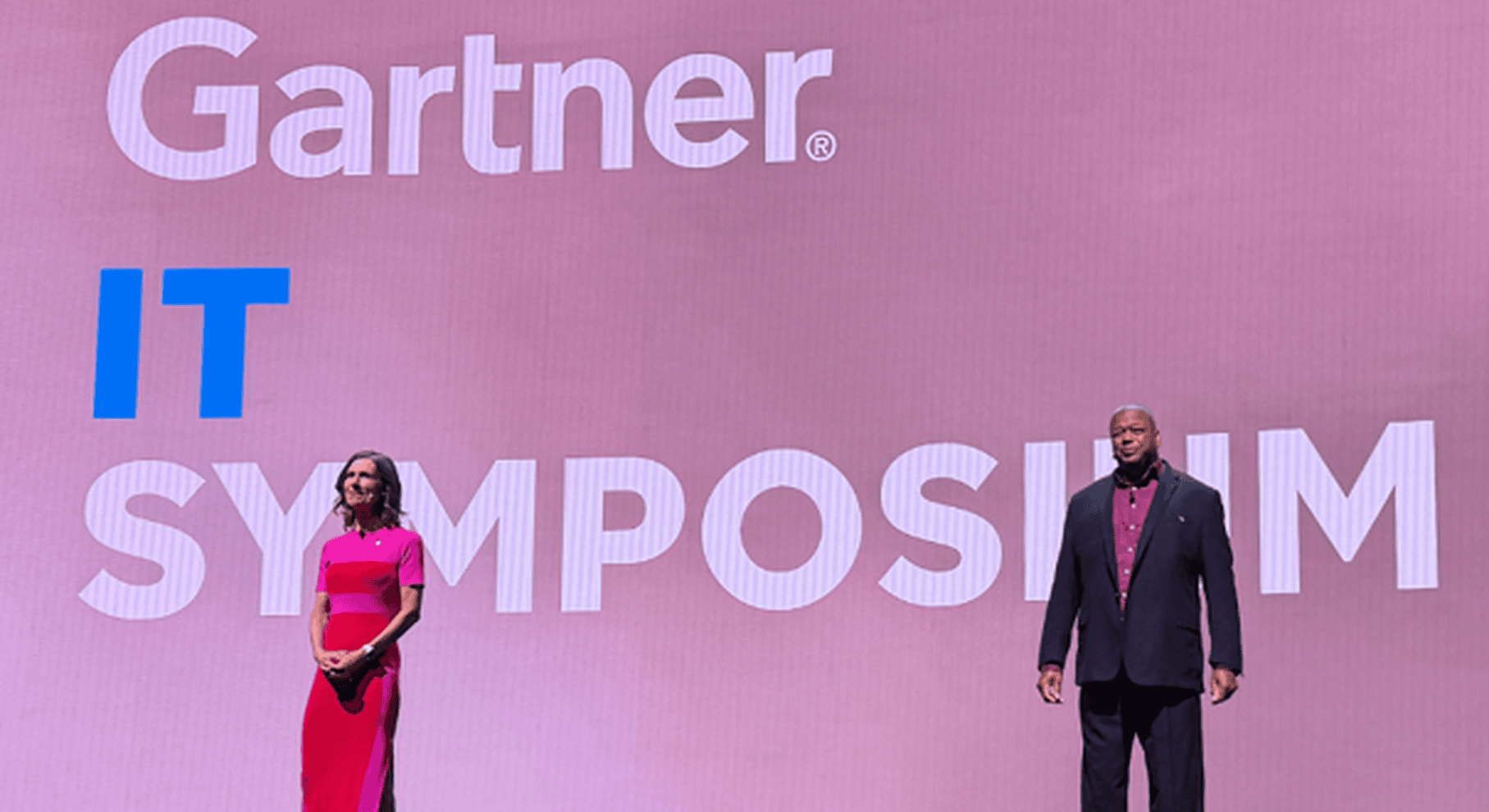
The analyses and forecasts presented by the U.S. market research firm at the Gartner IT Symposium/Xpo 2026 in Barcelona read like a sobering exposé of the current hype surrounding generative and agent-based artificial intelligence for the global community of existing SAP customers. Meanwhile, SAP’s Walldorf-based leadership team, led by CEO Christian Klein, celebrates the „SAP Autonomous Enterprise“ as an inevitable future reality—in which hundreds of autonomous Joule agents are supposed to independently manage business-critical core processes via the SAP Business AI Platform and the Knowledge Graph—the keynotes and analyses from Barcelona provide an empirical reality check. From the perspective of an existing SAP customer, the Gartner findings serve as a dramatic warning: The risk associated with deploying autonomous AI agents is growing exponentially, while the business value has so far increased only incrementally.
The fundamental challenge that Gartner identifies for CIOs and IT decision-makers: The mismatch between AI ambitions and actual manageability threatens to put companies in a dangerous predicament.
AI Agents Without ERP Governance
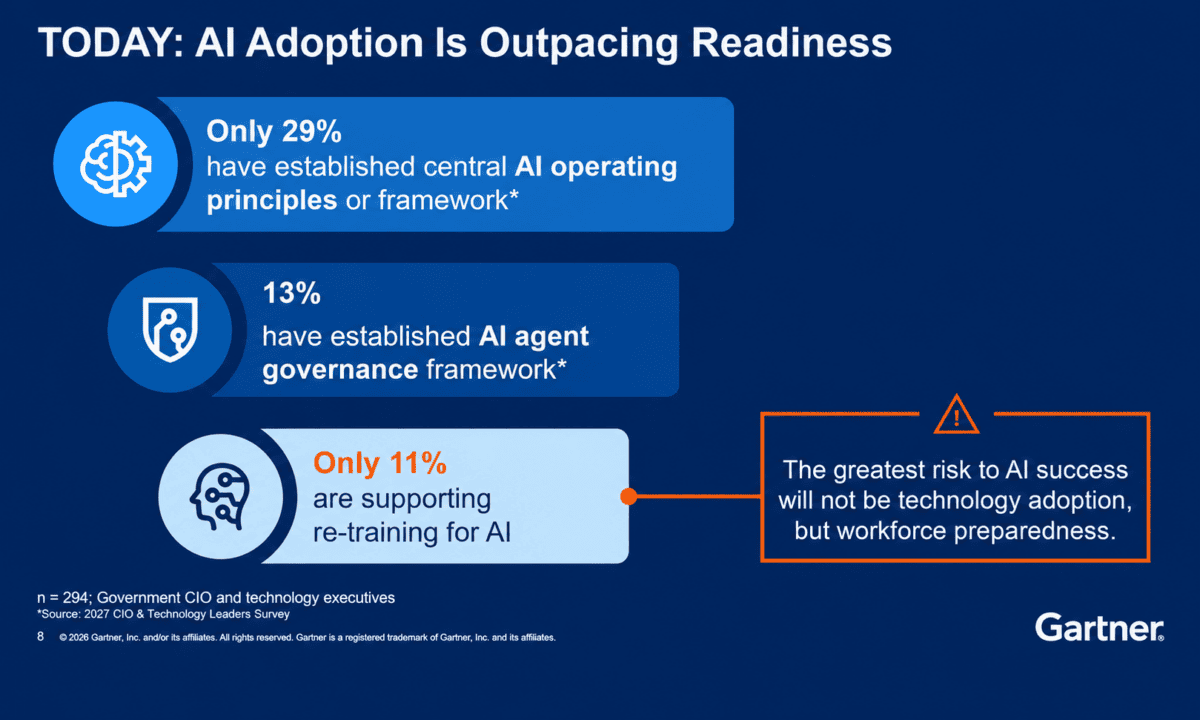
A global Gartner survey of more than 2,000 IT executives shows that 71 percent of companies plan to operationally implement agentic AI (Agentic AI) into their operations within the next twelve months, while at the same time only twenty-one percent have the governance capabilities necessary to control these autonomous systems at all.
Other surveys paint an even more drastic picture and warn that by 2027, 40 percent of companies will have to scale back or completely shut down autonomous AI agents in production because serious security and control gaps will come to light. For existing SAP customers, this represents an incalculable business and operational risk: If stochastic language models and autonomously acting agents access the transactional general ledger, material planning, or payment flows requiring approval without reliable safeguards, system errors and hallucinations will multiply at a devastating rate.
What starts as hope for innovation can quickly turn into an uncontrollable liability trap, especially since the European Union’s AI Act ultimately holds the user company accountable without exception for erroneous decisions made within the core ERP system. These risks are seamlessly reflected in the economic realities of the executive suites, as Gartner revealed at the symposium in Barcelona.
No Measurable Gain in Efficiency
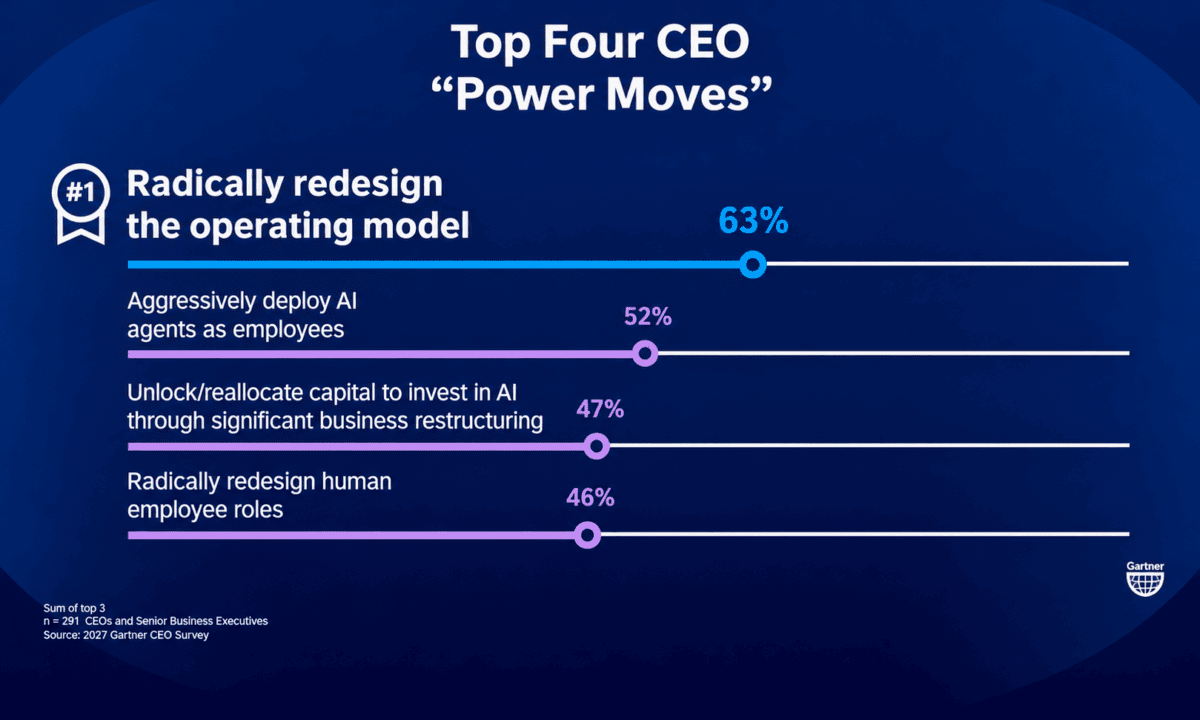
Although three-quarters of CEOs plan to continue expanding their technology investments, 44 percent of the CEOs surveyed candidly admit that they find it extremely difficult to demonstrate measurable financial returns from AI initiatives to investors and stakeholders. This observation aligns exactly with the prevailing sentiment among the German-speaking user community.
The investment report from the German-Speaking SAP User Group (DSAG) shows that 77 percent of users actively engaged in AI rely on independent solutions from hyperscalers such as Microsoft, OpenAI, or Anthropic, while a mere 3 percent trust SAP’s proprietary AI tools. Many CIOs are hesitant due to the opaque billing models from Walldorf, where consumption-based AI units and BTP Capacity Units expire at the end of the year according to an expiration logic, while uncontrolled peak loads caused by unchecked agents are immediately billed at expensive list prices.
In this context, Gartner makes it unequivocally clear that AI systems must be fundamentally embedded in workflows and decision-making models, rather than simply being tacked onto outdated processes as expensive add-ons.
The Cloud and Sovereignty
Another key pillar of the analysis from the Gartner Symposium in Barcelona shakes the very foundations of SAP's vendor-led cloud strategy: the issue of digital sovereignty.
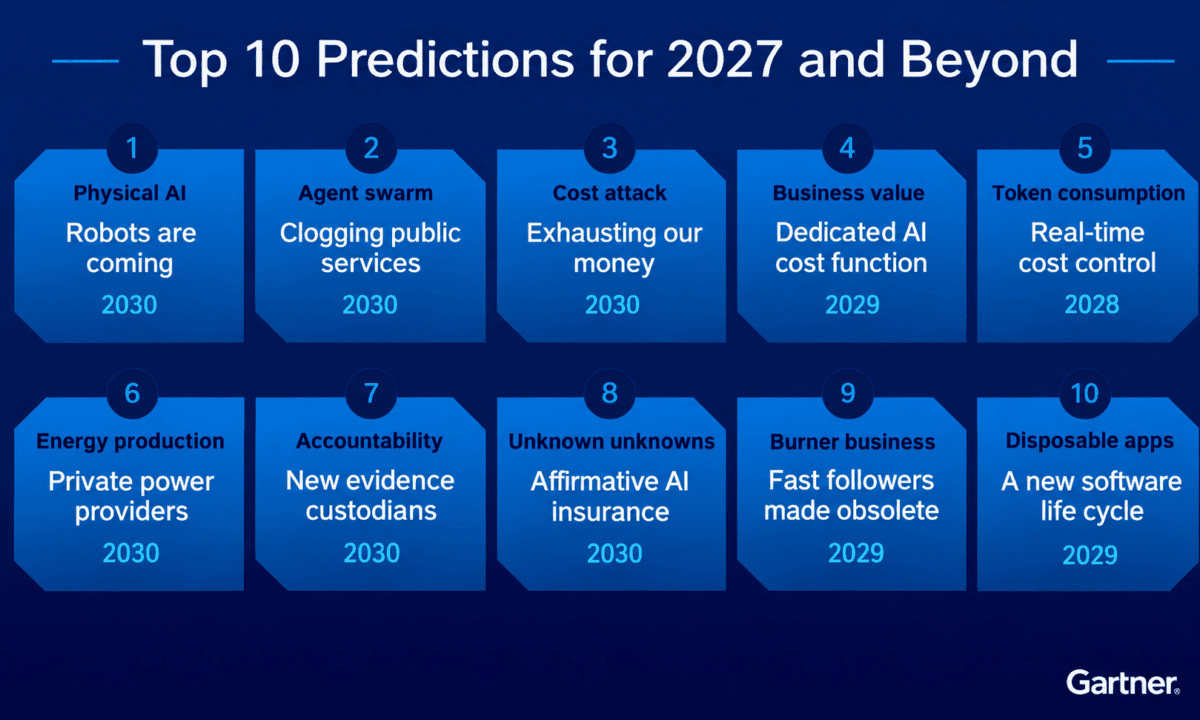
Gartner predicts that by 2029, more than ninety percent of all organizations in the European Union will have established a dedicated digital sovereignty strategy, because geopolitical dependencies and foreign regulations are no longer merely location-based issues, but rather determine the economic and operational survival of companies. IT leaders can no longer rely on foreign technology partners to provide long-term support or assume that local providers will remain unaffected.
Cloud and AI Exit Strategy
For existing SAP customers, whose business-critical processes form the backbone of their own value creation, this is a wake-up call that threatens their very existence. This dramatic vulnerability became apparent by the summer of 2026 at the latest, when geopolitical export restrictions imposed by the U.S. government abruptly limited access to Anthropic’s advanced language models—which SAP had embedded as the cognitive core of Joule. Any existing customer who blindly relies on the vendor’s cloud environment without an independent AI exit strategy is placing themselves in a fatal position of dependency.
At the same time, Gartner analysts in Barcelona are clearly rejecting the illusion of complete and self-sufficient technological isolation. Since global supply chains and technology stacks are too closely intertwined for all critical components to be replaced in an economically viable manner, Gartner’s most important advice is this: Companies must develop strategic flexibility and controlled interdependence.
For the SAP community, this means specifically identifying dependencies where they create unacceptable risks of failure and addressing them through architectural resilience. However, SAP Group management’s restrictive policy runs diametrically counter to this very recommendation: Through the SAP API Policy—particularly the controversial Section 2.2.2—SAP is attempting to artificially restrict direct, unlicensed data access for external AI agents in order to force customer companies into the fee-based ecosystem of the Business Technology Platform (SAP BTP) and the Business Data Cloud (SAP BDC). SAP is thus monetizing the strategic freedom of action called for by Gartner as a digital tariff barrier.
Governance and Regulatory Resilience
Gartner’s analyses of practical AI governance therefore provide existing SAP customers with insightful guidance that fundamentally reforms the traditional, static approach to compliance. Gartner succinctly states that the goal of governance is no longer merely to fulfill bureaucratic obligations, but rather to build regulatory resilience.
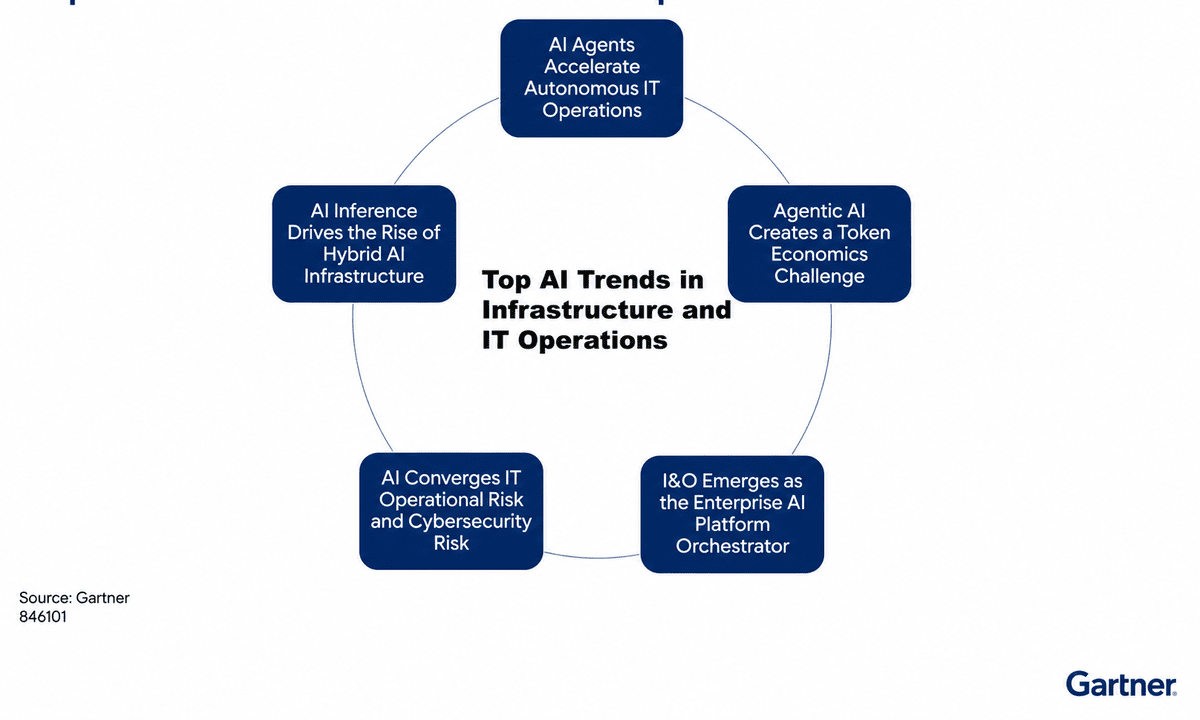
Given that the rapid proliferation of AI agents is compressing traditional governance cycles from years to just a few months, Gartner recommends an adaptive model consisting of detection, regulation, and optimization. Applied to the SAP context, this means that companies must first conduct a comprehensive inventory of all internal and external AI agents in use, rather than relying solely on vendor-specific tools such as the SAP AI Agent Hub in LeanIX.
Accountability and Duty of Care
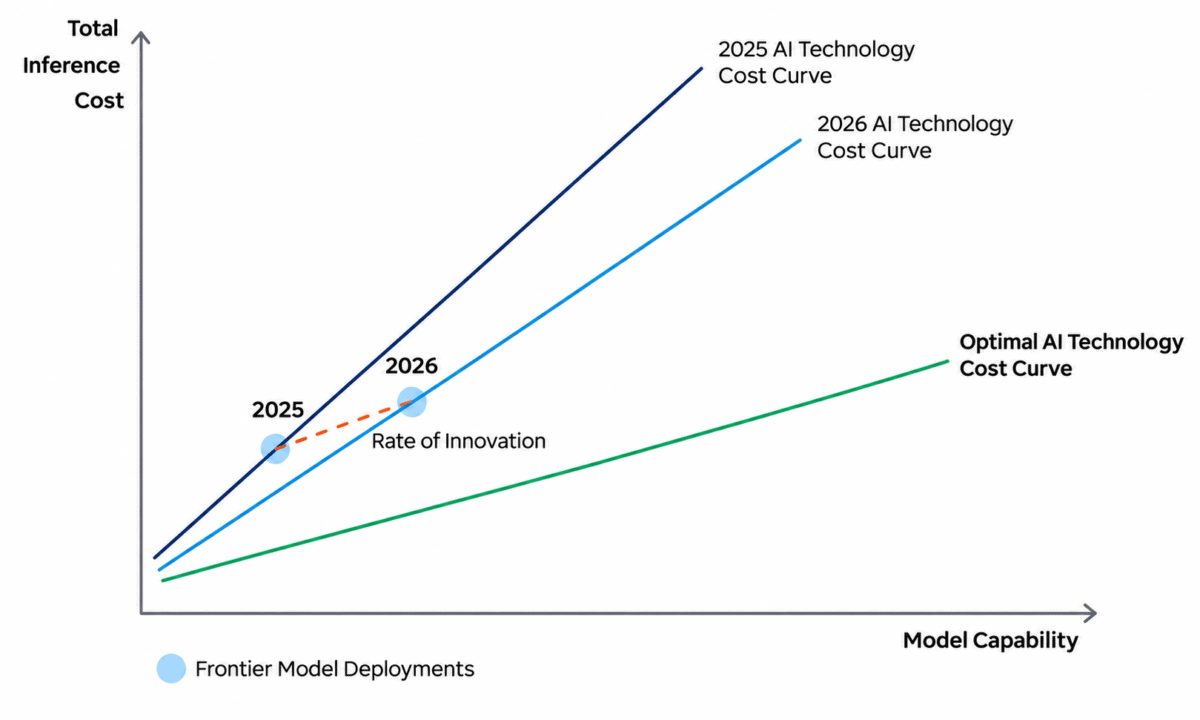
Responsibility must not be delegated to central IT departments but must be embedded directly within the operational business units as a distributed accountability framework. In addition, companies must prioritize semantic data quality: As Gartner demonstrates in its trends for 2027, organizations that enrich their business data with clear meanings, ontologies (SAP Knowledge Graph and HANA Vector Engine), and business contexts (semantics) increase the accuracy of agent-based AI by up to eighty percent while simultaneously reducing ongoing operating costs by up to sixty percent.
The key takeaway from the 2026 Gartner Symposium in Barcelona for the global SAP community is therefore: Don’t be blinded by marketing-driven visions of a fully autonomous enterprise in which the ERP core is handed over unquestioningly to unpredictable AI agents. True future-readiness does not come from blindly signing proprietary cloud contracts, but rather from a sovereign IT architecture built on a streamlined core (SAP Clean Core), standardized interfaces, and strict execution control. Existing SAP customers must actively embrace the options and exit strategies advocated by Gartner by relying on open standards such as the Model Context Protocol (MCP), preserving human final decision-making authority for material transactions, and establishing independent governance, which maintains a healthy balance between value creation and risk.

 Deutsch
 English
 Español
 Français