




IT service providers in Germany achieved an average revenue growth of 2.9 percent in 2025 (2024: 2.6 percent). In addition to a lack of macroeconomic growth drivers, artificial intelligence in particular is fundamentally changing the demand for IT services. 83 percent of the surveyed IT user companies see enormous efficiency potential in software development in the coming years. This will have a direct impact on project volumes, fees, and the staffing structure of IT service providers. Furthermore, 70 percent of IT decision-makers expect enormous AI-driven efficiency potential in IT operations, and 52 percent expect it in application modernization.
In line with these expectations, 54 percent of the IT service providers surveyed anticipate a decline in demand for software developers by 2028, while 44 percent expect to have fewer staff in application management and IT operations. These are the initial findings of the 2026 Lünendonk study „The Market for IT Services in Germany“ by the research and analytics firm Lünendonk & Hossenfelder.
The top 25 IT consulting and systems integration companies achieved an average organic revenue growth of 1.5 percent in 2025, adjusted for acquisitions (2024: 2.4 percent). This marks the first time in a long while that the Top 25 grew organically at a significantly slower rate than the overall market, which expanded by 2.9 percent. „Business performance among the top 25 IT consulting firms is very heterogeneous,“ says Mario Zillmann, Senior Partner at Lünendonk. „While some IT service providers were able to achieve double-digit growth rates, others fell significantly short of expectations. The main factor driving this trend is the mix of industries rather than the service portfolio. Consequently, even in 2025, the dominant industrial sector—in particular—provided little new impetus for increased IT investment due to the overall economic situation.“
Accenture remains the market leader, with revenue in Germany estimated by Lünendonk at 3.6 billion euros (2024: 3.4 billion euros). Capgemini holds onto second place, though according to Lünendonk estimates, it recorded a slight decline in revenue of 0.4 percent to 2.24 billion euros (2024: 2.25 billion euros). IBM, on the other hand, is closing in on Capgemini and increased its domestic revenue by an estimated 0.9 percent to 2.22 billion euros.
Among the top 10 IT consulting and systems integration companies, MHP (–11.4 percent) and Sopra Steria (–13.2 percent) posted double-digit declines in revenue in Germany. Materna is among the winners, with revenue up 9.7 percent. Alongside Adesso and Conet, Valantic (+11.7 percent) also achieved double-digit growth in 2025.
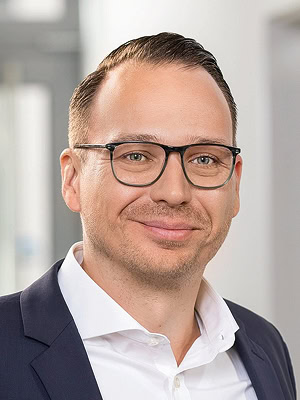
„During economic downturns, CIOs need to get more out of their
make the most of the available budget, relying on
”Automation and artificial intelligence."
Mario Zillmann,
Senior Partner,
Lünendonk
S/4 Services in Demand
The year 2025 saw consistently high demand for external IT services—particularly in the areas of IT modernization, S/4 implementations, and cloud transformation. „While demand for AI solutions was very high, project volumes are still relatively low at present. However, this will change in the coming years as companies“ AI maturity increases,” says Zillmann, describing the structure of demand in 2025.
2026 to 2027: Increasing Budgets
The CIO agenda for 2026–2027 places a high priority on key IT topics. The primary focus is on cybersecurity, IT modernization, cloud transformation, IT integration, digital sovereignty, and data and AI. Accordingly, the IT decision-makers surveyed are optimistic about their IT budgets: 55 percent expect budgets to increase from 2026 to 2027, while another 36 percent anticipate stable spending at a high level.
The distribution of the budgets is interesting: More than 40 percent plan to invest more money in IT innovations and IT modernization, while only 23 percent plan to spend more on IT maintenance.
„During economic downturns, CIOs need to get more out of their available budgets and are turning to automation and artificial intelligence to do so,“ says Mario Zillmann, commenting on budget planning. „Especially in IT operations, AI-based delivery models are already demonstrating enormous potential for savings—capital that can be invested in the necessary transformation initiatives.“
Cautious Outlook
For 2026, the IT service providers surveyed by Lünendonk are somewhat more cautious than in previous years. Nevertheless, they expect average revenue growth of 7.5 percent. By way of comparison: At the beginning of 2025, the average revenue forecast for 2026 was still 10.4 percent. (Source: Lünendonk)


 Deutsch
  English
  Español
  Français