
SAP Rise: A question of sovereignty



The SAP debate has reached a new level. It is no longer just about switching to SAP S/4 Hana or modernizing old processes. The question now is: how much digital sovereignty do companies want to - and can they - retain in the future?
Does an SAP Cloud ERP necessarily have to run in the data centers of global US cloud providers? Or are there realistic alternatives where critical systems, data and processes remain under in-house control? This question is almost identical for the simultaneous introduction of AI solutions and the associated need for hybrid cloud capabilities of companies. It is not just an architectural discussion. It is about companies' strategic ability to act - and about Europe's digital independence.
In 2025, SAP responded to the changing and growing requirements of the customer landscape with a strategic further development of the cloud transformation program.
Rise journey and SAP Cloud ERP
While the focus was previously on migration to S/4 Hana in combination with the largely standardized cloud-only operating model, this approach was expanded to include the much more comprehensive concept of the so-called „Rise Journey“. At its core, this model pursues a long-term transformation path in which a target image for the future functional and process landscape, including economic effects, is defined together with the customer. In contrast to previous Rise agreements, which were driven more by functions, platforms and deadlines, there is now significantly more scope for design. For companies, this should result in greater flexibility with regard to the timing of individual transformation phases as well as possible exit and adaptation options. This is an important point if it becomes apparent over the long term that economic or functional goals cannot be achieved to the extent expected.
Complex S/4 migration
It will be interesting to see whether the countless SAP customer systems will actually be merged into a functionally comparable standardized software cloud service at some point. After all, a pure lift-and-shift approach - especially for ERP systems - makes little sense and often does not justify the considerable additional costs.
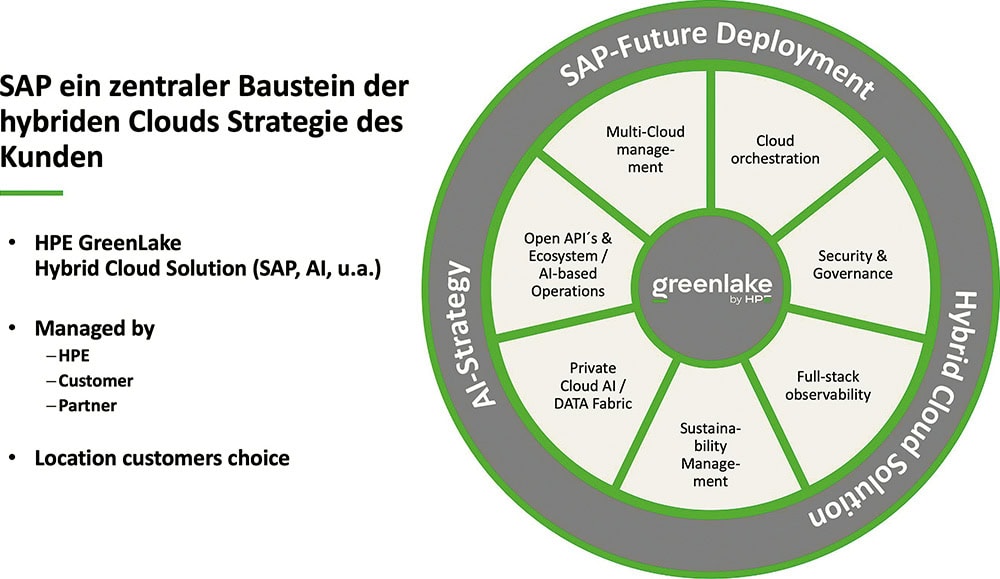
GreenLake platform for strategic SAP transformation.
At the same time, SAP is using this approach to address a central practical problem that affects large and complex companies in particular: the complete migration of legacy systems to S/4 Hana by the end of maintenance in 2030 is hardly feasible for many organizations under the existing framework conditions. This assessment is also supported by user associations such as DSAG, which continue to point to the overall sluggish progress of S/4 Hana migrations, and not just among large customers.
Against this backdrop, a significant number of companies are still at the beginning of this journey.
Only at the beginning of the S/4 journey
It is characteristic of this phase that the desired target image can often only be described in qualitative terms. Specific statements on the effects on cost structures, process improvements or functional developments initially remain fraught with uncertainty. As a result, realistic figures - if any - will only be quantifiable at an advanced stage of the transformation.
For SAP, the long-term goal is much clearer: The revenue model is inevitably growing - operating income supplements software revenue. Hardware, third-party services and services that were previously provided by the customer or third parties now appear as cloud revenue in SAP's books. Key figure: „Annual Recurring Revenue“ (ARR). The infrastructure service is usually provided by a hyperscaler - unless the customer raises significant objections. Customer loyalty is entering a new dimension of dependency. While the bond was previously limited primarily to the software used, it is now being extended to an almost indissoluble overall service comprising applications, databases and the underlying system platforms. This close link between the software manufacturer and, as a rule, the US cloud provider is a source of irritation for customers. In addition to the already pronounced software lock-in, the hyperscaler has another one.
The consequences: limited technological and organizational sovereignty. In the event of a crisis, little or no influence can be exerted on the company's own IT. Costs that are difficult to calculate and manage can become a fire accelerant in the event of economic problems due to a lack of exit options. Many are therefore looking for more sovereign ways. Somehow retaining at least some control or being able to take over again if the worst comes to the worst.
Use the cloud, stay on-prem
Since the launch of Rise, SAP has also offered an on-prem cloud model: „SAP Cloud ERP Private, Customer Data Center Option (CDC)“. As part of the SAP cloud contract, the software runs on infrastructure in the customer's own data center or in a co-location of their choice. In any case, the company retains physical access to systems, data storage and applications - a potential trump card for disaster or exit scenarios.
The difference between this model and hyperscaler deployment lies primarily in the location. Technology and function are identical. The standardized SAP software code line guarantees that all deployment models are functionally identical. Ultimately, the same software runs on all certified options or options offered by SAP.
Plus: Latency and performance
One example of this solution is the Danish energy technology company Danfoss. It uses the on-prem option from Rise to operate its SAP S/4 Hana environment. The Danes use GreenLake Cloud Services from HPE. The advantage of this is that Danfoss can continue to use its energy-efficient modular data centers, which it operates at its headquarters in Nordborg, Denmark.
In addition to the hyperscaler offerings and the existing on-prem options, the opening up to more sovereignty in the use of SAP solutions also brought further solution approaches that are also localized in Europe. In September 2025, SAP also presented the „SAP Sovereign Cloud“. However, the range of functions and technology are still at an early stage. In this respect, concrete customer scenarios that can be used on a broad scale must first be specified or awaited.
HPE GreenLake
How do you get into the cloud without losing control? GreenLake from HPE provides an answer. The service provides compute, storage and network locally or hybrid „as a service“ - with all the typical cloud features. The key differentiator: operation takes place at a location of the company's choice. As a result, SAP has also been using the GreenLake solution from the outset as an on-prem option within Rise for customers for whom the use of one of the major public cloud providers is not an option.
For companies seeking a higher degree of technological and operational independence, purchasing GreenLake as a cloud-on-premises model directly from Hewlett Packard Enterprise (HPE) is an alternative operating option.
In this scenario, the SAP environment - for SAP S/4 Hana, for example - is not operated in a public cloud infrastructure fully controlled by the software provider, but in a de-dedicated, customer-oriented environment that nevertheless enables typical cloud operating and billing models.
The main advantage of this approach lies in the increased sovereignty of the customer: Companies retain the freedom to decide which service provider is responsible for application operation, how the underlying technology stack is specifically designed and where cost structures can be specifically influenced. This applies to infrastructure components as well as operating and service processes. The main prerequisite for this approach is that appropriate, valid SAP licenses are available for operation. Within this framework, however, the model opens up significantly greater degrees of freedom compared to more standardized, fully integrated cloud offerings and can therefore make an important contribution to reducing one-sided dependencies. As a hybrid cloud platform, GreenLake bundles workload services from hyperscalers, in-house IT and third-party providers. „Hybrid Cloud by Accident“ becomes „Hybrid Cloud by Design“. Operation is handled by HPE, the customer's internal IT team or a service provider.
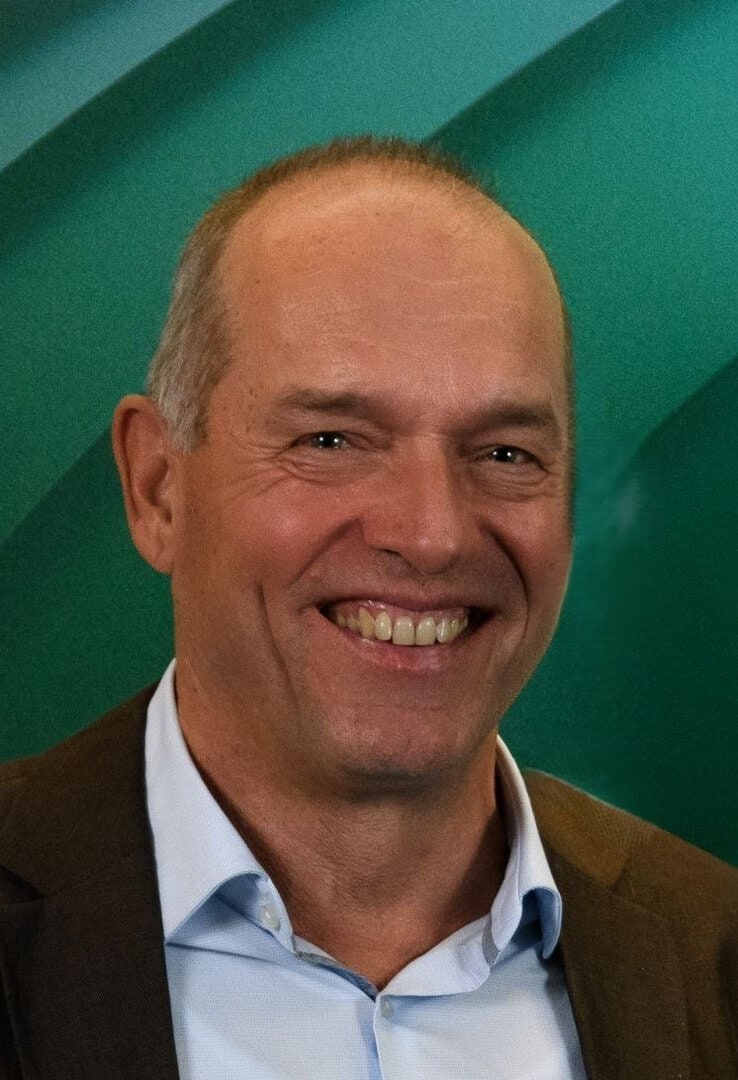
"It is about the strategic ability of companies to act - and about Europe's digital independence.“
Albrecht Munz,
Business Development Manager DACH,
HPE
Basis not only for SAP services
Regardless of the operator model, if the public cloud service fails, the customer's core systems continue to run 1:1, whereby administration and integration processes must be adapted accordingly. Regardless of the deployment model, a highly available, scalable infrastructure remains the basis for cost-effective IT operations. SAP, Intel and HPE have consistently developed these systems together as part of co-engineering projects.
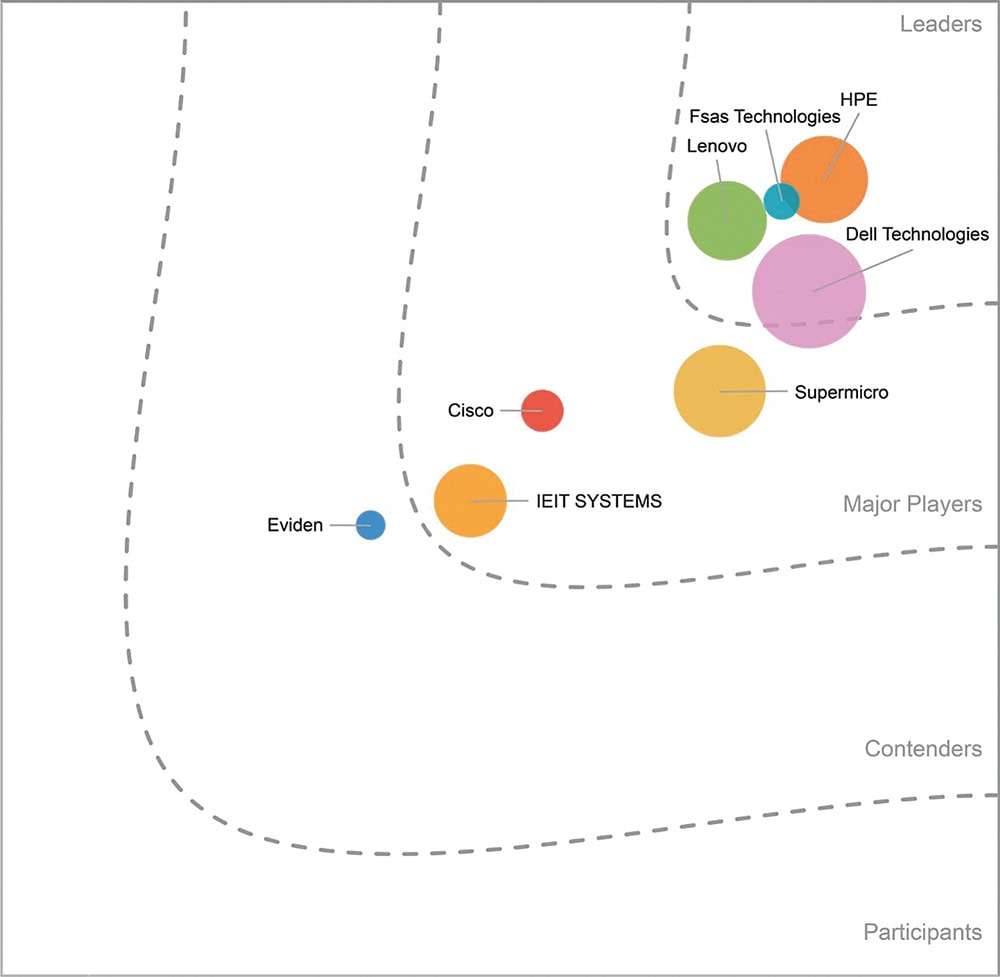
As a result, HPE servers based on Intel Xeon processors now cover all performance levels from the smallest to the largest SAP instance. The IDC MarketScape Report - SAP Hana-Certified Server 2026 - illustrates the position. Today, these systems are located in hyperscaler data centers, customer data centers or at private cloud providers. Example: The banking specialist FI-TS in Munich uses HPE's Scale-up Server 3200 with Intel Xeon processors extensively for its SAP services.
AI strategy and hybrid cloud
Parallel to the SAP transformations, the need for AI solutions is exploding. These also require infrastructures and infrastructure services whose profiles and functionalities can vary greatly. Security, sovereignty and control also play an important role in these new topics. A conclusion that many managers in companies are facing today and which further increases the complexity of the transformation.
The IT transformation thus forms a strategic triangle of S/4 transformation and operating model, scalable AI strategy and economically viable hybrid cloud. HPE's AI portfolio is also based on GreenLake Services and follows the hybrid approach: AI runs where data is generated - in your own data center, at the edge or in the cloud. The aim: flexible, scalable and at the same time sovereign AI use. GreenLake supports classic and generative AI workloads. HPE sees AI as a hybrid, controllable service - not as a pure public cloud solution.
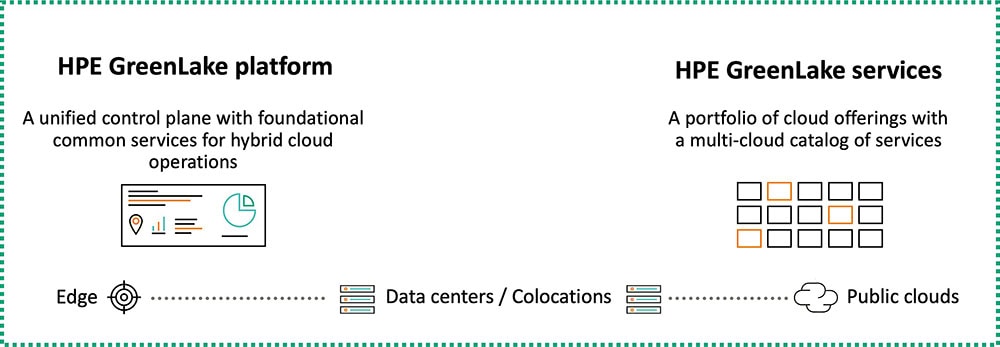
As a hybrid cloud platform, HPE GreenLake bundles workload services from hyperscalers, in-house IT and third-party providers.
Conclusion
SAP Journey, AI innovation and data-driven business models are inextricably linked to cloud platforms. This creates a tension between innovation and control. Those who disconnect lose speed; those who completely abandon themselves become dependent. The trick is to harness global innovative strength and maintain technological and economic sovereignty. Sovereignty is an ongoing task. The SAP Journey therefore remains less a technical project than a strategic course-setting exercise. (rk, source: HPE)

 Deutsch
  English
  Español
  Français