
Rescue through intelligent data management

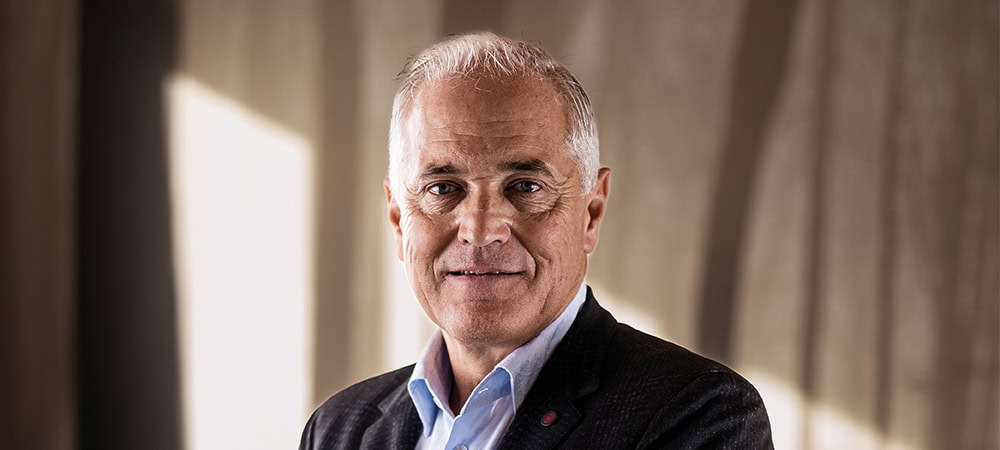

Thomas Failer, founder and Group CEO of Swiss-based Data Migration International, sees the current situation as a historic opportunity for the SAP community. Failer firmly believes that companies that set the right course now will emerge stronger from the transformation. His vision is that of a data-driven company that can react agilely to market changes because it is not shackled by its own past. For him, his offering JiVS IMP (Information Management Platform) is the key to breaking these shackles.
Thomas Failer often talks about the need for existing SAP customers to stop seeing data as something to be hoarded. Instead, we should see data as a river that flows through the company and is used where it is needed. The rigid silos of legacy systems need to be broken down. The Group CEO of Swiss Data Migration International is convinced that the separation of infrastructure, application and data is the only way to remain flexible in the long term.

„Data independence is the ability of companies to manage their data independently of the applications in which it was originally generated until it is deleted in a legally compliant manner,“ explains Thomas Failer in an exclusive E3 interview. „This makes it necessary to separate the operational systems from the historical information. It is this information that usually clogs up the operational systems as hard-to-digest data ballast or lies fallow in archives and is therefore useless for the business. This separation enables seamless lifecycle management and audit-proof access.“
The SAP community is facing a turning point comparable in scope to the Y2K problem or the introduction of the euro, but with far more complex architectural and strategic implications. For many existing customers, the switch to S/4 is no longer a pure technical necessity, but a forced march into a new era whose rules are often being rewritten while the game is still being played.
At the center of this storm is data management - a discipline that has been managed for decades as a necessary evil in the basement of IT departments and is now suddenly deciding the weal and woe of entire corporate strategies. S/4 Hana is not just a new release; it is a paradigm shift based on the Hana in-memory database and requires a fundamental clean-up of historical legacy issues. Anyone who stumbles here risks not only exploding project costs, but also the failure of the entire digital transformation. „Data independence is indeed the central aspect of data sovereignty, but not the only one. It is the prerequisite for taking the other aspects into consideration in the first place,“ emphasizes Thomas Failer.
Data protection and loss of control
„Well, we all know about the geopolitical turbulence,“ Failer summarizes the findings in the meantime: „All of a sudden, the law of previously allied states becomes a risk. Let's put it bluntly: spies can legally gain access to our companies“ trade secrets at the behest of their governments and therefore from their country's perspective. And why? Because the service providers who hold the secrets are not only subject to our laws, but also to the laws of their home country and must comply with them."
Against this backdrop, the question of a sovereign cloud and the right operating strategy becomes an existential decision. SAP is pushing into the cloud with all its might, propagating „cloud only“ and trying to lure customers into subscription models with programs such as Rise with SAP. But the reality for German and European companies is different. Data protection, compliance and the fear of losing control make many CIOs hesitate. „Legal“ espionage is a general phenomenon in cyberspace.
„There are currently 137 countries around the world that have enacted regulations on the retention of company data and which apply not only to local but also to international companies,“ says Thomas Failer, describing the current situation. A famous recent example is the Indian Company Act. This law requires that data generated and processed by companies in India must be stored in the country on a daily basis. „The risk of a lack of data independence is that companies keep more data in the country than they actually need to,“ explains Failer.
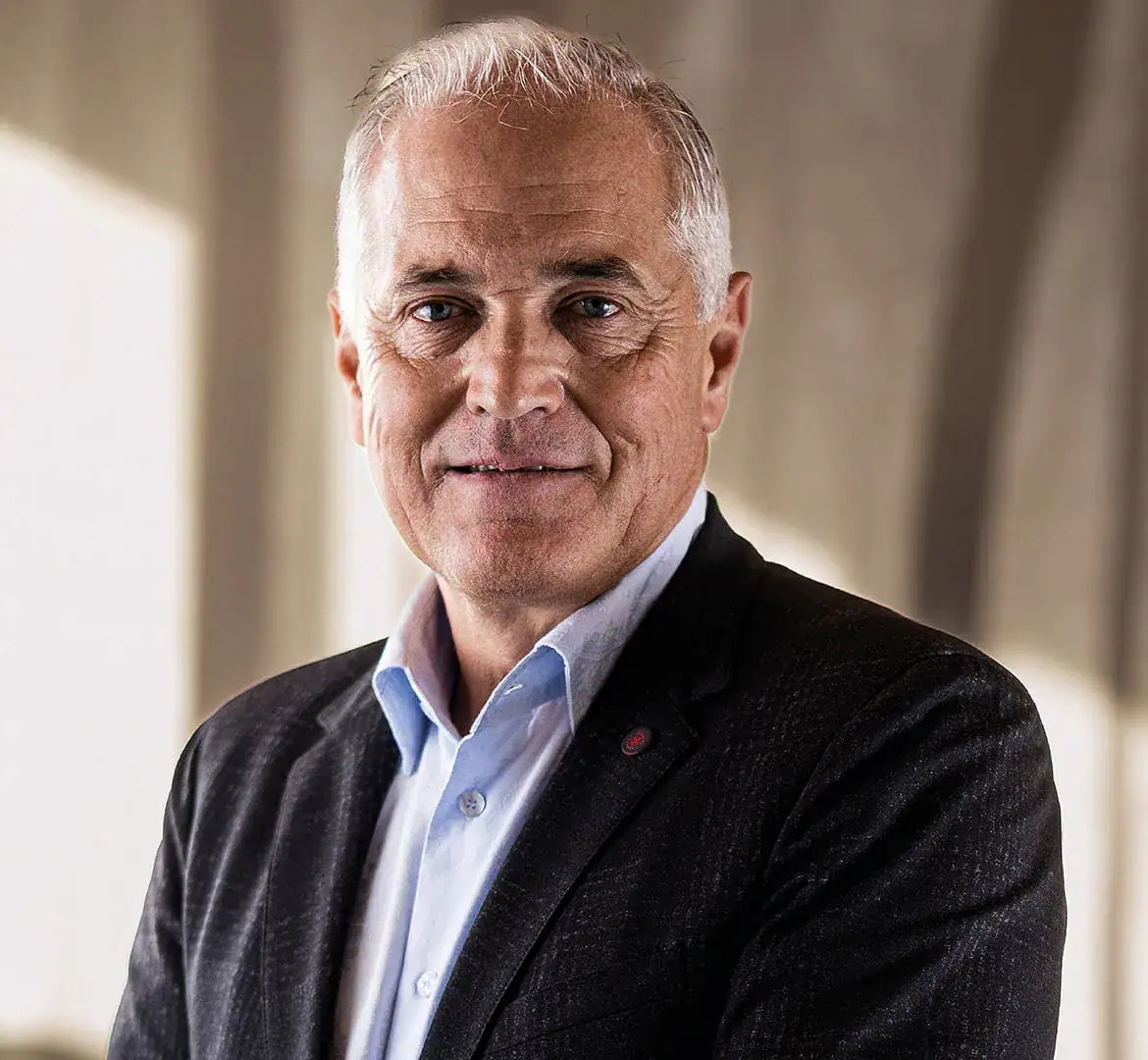
Graduate computer scientist (FH) Thomas Failer is the founder and Group CEO of the internationally active Swiss software provider Data Migration International. Since the generational change from SAP R/2 to SAP R/3, he knows how transformation projects can be accelerated and that it is just as important to get people on board and motivate them.
EU Cloud Act
Is the EU Cloud Act not a solution to this problem? The regulation is the right approach, says Thomas Failer: „However, making the data withdrawal technically and financially possible says nothing about how companies can deal with their data after the withdrawal. Under certain circumstances, the data may even be useless because the business context is missing. Although the data is then protected from unauthorized access, it may have lost its value. At the very least, companies will have to invest a great deal to recover their own treasure.“
The solution consists of a platform approach for company data. This provides existing SAP customers with all the necessary functionalities to manage the lifecycle of data independently of their original applications and systems, i.e. including their business context.
„Such a platform approach must support all conceivable business scenarios. Companies must be able to select data and transfer it to India, for example, at the touch of a button. However, such selections are also necessary in the case of a carve-out, when data has to be transferred from a business unit or subsidiary to the buyer, but only this data,“ demands the founder and Group CEO of Swiss Data Migration International.
SaaS solutions are incredibly practical, useful and indispensable in many companies. But what happens if access to them is denied for whatever reason? „Then not only are the popular applications and functionalities missing, but the data is also no longer available,“ Thomas Failer knows from his professional experience. „With our platform approach, customers can not only replicate selected data to India or China, but also from SaaS solutions to their own servers.“
Existing SAP customers benefit from the DMI-JiVS platform approach, not only with on-prem systems or SaaS solutions, but also and especially during the transformation to S/4 Hana. „With the help of our platform, they can only transfer the data that they really need in the new system. Incidentally, this is usually only five to ten percent of the transaction data and around half of the master data and business objects. Of course, this also requires prior data cleansing,“ says Thomas Failer.
The platform is primarily intended to keep SAP systems lean, not to feed them. „Keeping S/4 systems lean is indeed very important, but it is only one application scenario,“ explains Thomas Failer. „Our goal with our platform is to cover the essential part of what Gartner calls a data fabric. A separate data layer that is independent of the underlying systems and the applications above it. It is the key to data independence and sovereignty.“
This is where Thomas Saueressig, SAP Executive Board member for Customer Services and Delivery, comes into play. He has recognized that the path to the cloud is not a walk in the park for many customers, but a hurdle race. Saueressig repeatedly emphasizes the need for freedom of choice and flexibility. He knows that customers in highly regulated industries or in the public sector cannot simply store their data on US hyperscalers' servers without losing control. His vision aims to harness the benefits of cloud computing - scalability, innovation, speed - without giving up digital sovereignty.
Thomas Saueressig argues that existing SAP customers need to be prepared for uncertainty and that digital sovereignty is not a temporary hype, but a permanent state that needs to be managed. For him, innovative strength and digital sovereignty go hand in hand. He promises that SAP will provide modern and highly secure solutions that meet even the strictest requirements. But words alone are not enough when the technical reality speaks a different language. The dependency on hyperscalers is often greater than it appears, and the promised sovereignty still has to prove itself in hard practice.
It is precisely in this mix of technical pressure, strategic uncertainty and regulatory constraints that Data Migration International is positioning itself as the saving anchor for beleaguered existing SAP customers. Under the visionary leadership of Thomas Failer, the Swiss company has developed into a beacon in the fog of data migration. Thomas Failer, a man of clear words and deep insights into the needs of users, recognized early on that the traditional methods of data migration - the laborious exporting, transforming and importing of all data - were doomed to failure in the S/4 world. His approach is radically different and impresses with a logic that is so compelling that you wonder why someone didn't think of it sooner.
Thomas Failer calls for freedom for data. He advocates decoupling data from the application level and managing it in an independent layer. His credo is: separate instead of migrate.
Reduction and quality
On the one hand, this is about reducing the data as much as possible, for example by identifying and eliminating duplicates. Above all, however, it is about the quality of the data. „In the context of AI, this is perhaps the most important functionality of the platform. How can companies trust the recommendations and results of an AI if they can't trust their own data?“ Thomas Failer points out. The starting position for many existing SAP customers is sobering. System landscapes that have grown over decades, often highly modified and riddled with a proliferation of Z programs, have created huge data graveyards.
But the data graveyards are there, and they need to be managed - whether for regulatory reasons, to comply with retention periods or simply because the department is afraid of losing information. This is where the old world of relational databases collides with the new, expensive world of in-memory technology. Hana storage is precious, far too precious to be clogged up with historical data waste that no longer offers any operational added value.
At the heart of the DMI solution is the JiVS IMP platform. It is much more than just an archive; it is an intelligent historization platform that makes it possible to completely decommission legacy systems while retaining full access to all historical data. Thomas Failer describes JiVS IMP as a system-independent platform that manages the entire lifecycle of information - from transfer from legacy systems to legally compliant storage and final deletion in accordance with
GDPR. Before data is migrated to the new system, it can be cleansed, harmonized and enriched on the JiVS platform. The result is a „clean core“ in the truest sense of the word - a lean, agile S/4 system that works with clean data and is not crushed by the burden of the past.
The best way is to have full control over the data. „Only then can you provide your own employees with AI tools that you also have and must have under your control. Trust in your own data, in AI and in your own employees therefore go hand in hand,“ says Thomas Failer, outlining the new challenges.
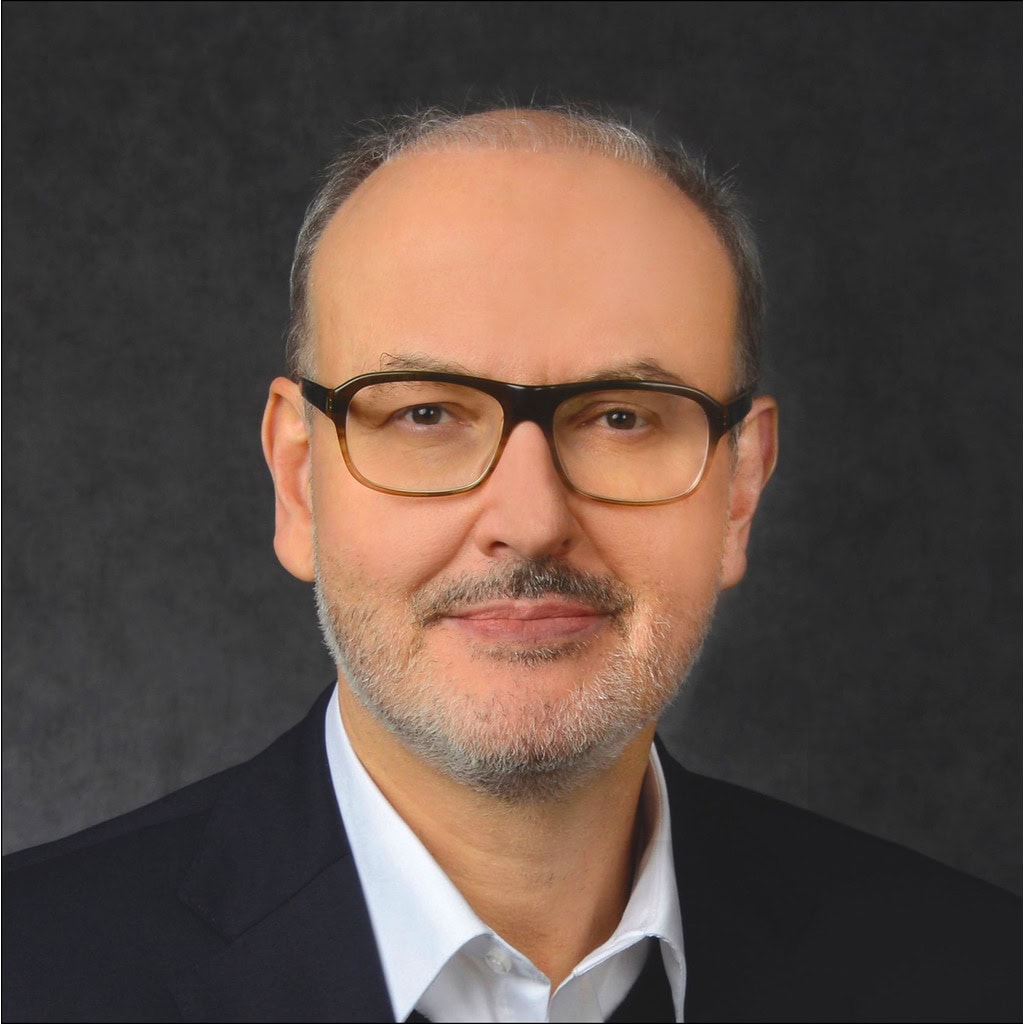
There is an instructional connection between data management and Clean Core, which DMI and Nova prove.
Prof. Dr. Alexander Zeier,
Co-Founder & Chief Scientist,
Nova Intelligence
AI and robotics
AI is not an isolated trend, but is converging with robotics. „It is incredible, almost breathtaking, the progress that is being made in the field of humanoid robotics,“ says Thomas Failer from his own studies. „When these machines interact with humans, they have to act correctly in every respect, including in an ethical sense. We have to be able to trust these machines. And we can only do that if we can also trust the data with which their control AI has been trained.“
The discussions in Davos a few weeks ago showed that managers are no longer treating data governance as a purely technical issue. The topic has reached the level of management and supervisory boards. And something else has arrived there: Data independence determines whether companies can use AI without being dependent on specific providers. Whether they can trust their AI and whether they remain resilient and agile in times of geopolitical and regulatory uncertainty.
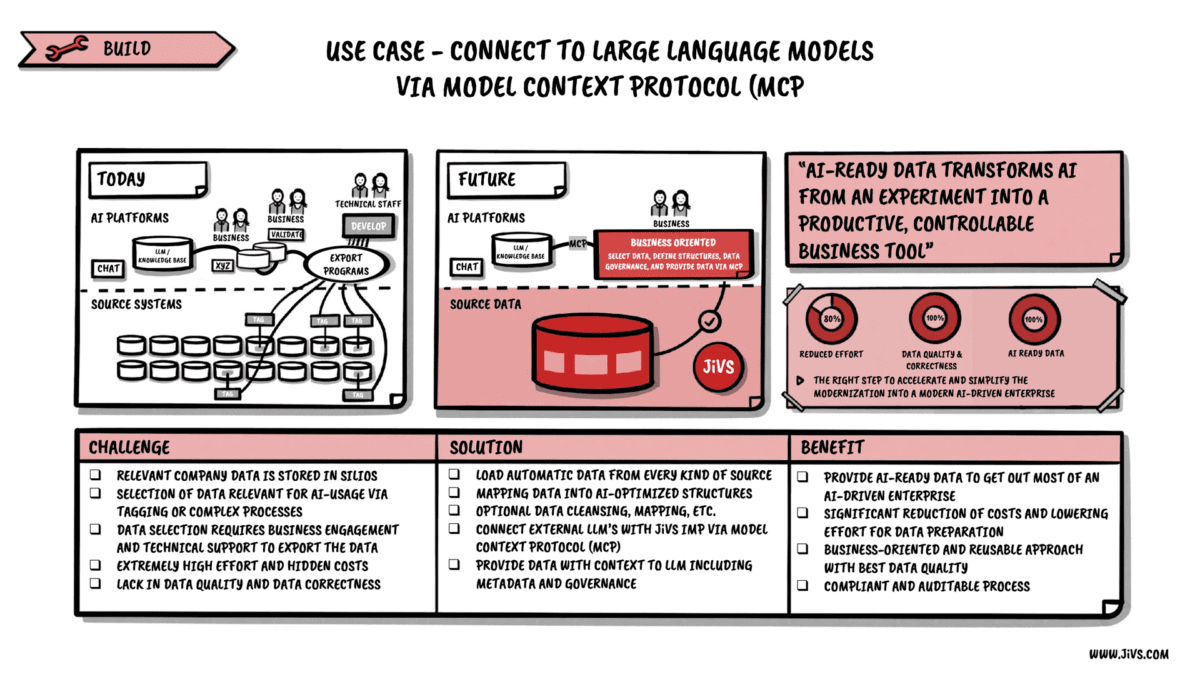
The main role is simplification! Of course, this means a great deal of coordination between departments. Most of this is dedicated to discussing which company-specific data and information the AI applications should access. These are naturally distributed across many different storage and source systems. And export programs have to be written for each individual system. „So AI means more complexity and therefore more susceptibility to errors and more effort. AI applications are almost like a foreign body that is amateurishly grafted onto unimproved branches,“ says Failer.
Singular platform
The entire proliferation of source systems should give way to a single platform that contains all information together with its business context. If the volume of data is drastically reduced, the costs for cloud operation will drop significantly.
In addition, decoupling the data from the application enables much greater flexibility. Companies can change their ERP strategy, switch cloud providers or even go on-prem again without losing their historical data or having to start complex migration projects.

SAP is a pioneer for the sovereign cloud from a political and IT strategy perspective for customers and partners.
Thomas Saueressig,
Member of the Management Board, SAP
JiVS IMP acts as a neutral harbor for the data, regardless of the storms on the ERP market. Thomas Failer sees this as a significant contribution to the digital sovereignty that Thomas Saueressig so vehemently demands. After all, those who have sovereignty over their historical data cannot be blackmailed and can make their own decisions about their IT future. „With the platform, you have everything you need,“ says Failer, promoting his JiVS IMP product. „You can independently select the information you need for your AI applications and define the governance rules. The business has full control here.“
And the entry point is the JiVS platform? „It doesn't have to be,“ explains Failer. „SAP can also be the entry point. In that case, our platform is the bridge rather than the entry point. We call this bridge the JiVS IMP Data Collector. The functionality builds on existing features of our platform, the Turbo Extractor and Data Replication Service. This means that we can quickly extract large volumes of data and information together with the business context from the source systems and transfer them to our platform.
We can also transfer large volumes of data to other target systems such as S/4 Hana or IoT and robotics applications or instances of our platform in the shortest possible time, even after a selection. This replication can be repeated automatically at freely definable intervals. Just think of SAP's Business Technology Platform. There, companies can run any type of service alongside their SAP system. And thanks to our Data Collector, companies can easily and automatically supply these services with the required and appropriate data. Incidentally, this is not only easier, but also more cost-effective.“
SAP customers can decide for themselves which and how much data and information they want to store in which environments. A pure main storage environment, as is the case with S/4 Hana, is certainly the most expensive. „It's cheaper on the Business Technology Platform, where the services only use part of the data from our platform,“ says Thomas Failer.
JiVS IMP also runs in the SAP cloud, which offers the corresponding possibilities. „We are currently looking at European cloud providers with sovereign environments in order to implement our platform there, in particular the Turbo Extractor, Data Replication Service and the new Data Collector,“ says Failer, explaining a current project. „Of course, you can also install and operate our platform in your own data center. With our platform, customers can already be data-independent and data sovereign.“
But the challenges do not end with data management. The architecture of S/4 itself calls for new ways of thinking. This is where the concept of the Clean Core comes into play, which is closely linked to the work of Professor Alexander Zeier and his start-up Nova Intelligence. Zeier, one of the co-inventors of the Hana database, has a deep understanding of the architectural necessities of modern ERP systems. He knows that the long-standing practice of adapting the SAP standard to one's own needs by modifying its core no longer works in the cloud world.
The connection between data management and clean core is evident and is perfectly illustrated by the solutions from DMI and Nova Intelligence. A clean core is only possible if the data is also clean. When existing SAP customers migrate old, modified data structures to a new system, they often force the new system to support old logic, which in turn leads to modifications. Thomas Failer and Alexander Zeier play a kind of double pass here. With JiVS IMP, Failer ensures that the data load is reduced and the remaining data is cleansed. With Nova Intelligence and his AI agents, Zeier ensures that the code that processes this data is analysed and modernized.
This symbiosis of intelligent data management and AI-supported code transformation is the key to success. Thomas Failer repeatedly emphasizes that you have to get to the root of the problem. It is not enough to just combat the symptoms. You have to eliminate the causes of complexity. And the causes almost always lie in the history - in the accumulated data and the grown code. By removing the historical data from the operational system and managing it on a separate platform, DMI creates the space that Nova Intelligence needs to modernize the code.
Thomas Saueressig's role in this structure is that of a political and strategic trailblazer. He must create the framework in which solutions such as those from DMI and Nova Intelligence can flourish. His commitment to the sovereign cloud and freedom of choice for customers is an important signal.
DMI's solutions offer a pragmatic, efficient and secure way out of the data trap. With JiVS IMP, Thomas Failer has created a platform that delivers exactly what existing SAP customers need most urgently today: a bridge between the old and the new world that allows them to shed the ballast without losing their knowledge. Together with Nova Intelligence's innovative approaches for the Clean Core, this creates a holistic picture of a modern ERP architecture. It's time for existing SAP customers to wake up and see their data no longer as a burden, but as their most valuable treasure that needs to be unearthed - but with the right tools and not with yesterday's shovel.


 DE
DE  EN
EN  ES
ES  FR
FR