
The radical AI agent




Cloud, AI and qubits
While SAP's existing customers are cautiously approaching the ECC deadline of 2030, SAP CEO Christian Klein is constantly surprising them with new technical feats: Cloud computing was followed by AI, then agentic AI and quantum computing. None of this is helpful. The SAP share price remains far from its all-time high.
For existing SAP customers, the conclusion of this investigative analysis must be that blind obedience to the promises of salvation from SAP headquarters in Walldorf can threaten their very existence. The possibilities of generative AI and autonomous AI agents in the SAP environment are undeniably fascinating, but as long as the elementary basics such as excellent data quality (clean core), reliable exit strategies and complete liability issues have not been clarified, the use of AI in ERP is like open-heart surgery with untested instruments.

Today, true digital sovereignty requires user companies to maintain a high degree of critical distance, build up their own AI expertise beyond the marketing brochures from Walldorf and have the courage to demand transparent IT platforms from SAP that offer genuine flexibility without contractual blackmail.
The radical AI makeover by Christian Klein
In an interview with the Manager Magazine SAP CEO Christian Klein explains that after cloud computing, the AI revolution is now imminent. But AI from SAP on the BTP (Business Technology Platform) with the GenAI Hub is not convincing most existing SAP customers. Michael Kroker writes on wiwo.de: „The relevance of SAP for users in Germany remains at a high level. However, when it comes to the mega topic of artificial intelligence, the vast majority of customers are turning to other providers.“ (Source: WiWo)
In the latest DSAG investment survey, 77 percent of members who have already implemented AI use cases state that they have them in production or in use with non-SAP solutions, while only three percent rely on SAP. 65 percent are in the test phase with non-SAP solutions, compared to eight percent with SAP solutions. „These figures should be seen in the context of the survey basis and the varying complexity of application scenarios. Different requirements apply for a use case in the SAP environment than for the use of standard solutions based on large language models, for example,“ explains Jens Hungershausen, Chairman of the DSAG Executive Board.
In the frenzy of AI
ERP giant SAP from Walldorf is presenting itself as a technical pioneer in the frenzy of artificial intelligence, but for the critical existing SAP customer, the omnipresent marketing promise surrounding SAP Business AI often turns out to be expensive icing on a strategic vacuum on closer inspection. SAP CEO Christian Klein is pushing the company in the direction of the cloud and AI, primarily to boost the share price and satisfy analysts, but in doing so is revealing a glaring lack of in-depth AI core expertise.
Instead of developing a sovereign, independent AI vision for complex ERP landscapes on its own, SAP is increasingly only acting as an integrator for the language models of the large US hyperscalers and start-ups, which massively calls into question its former technical innovation leadership.
AI launch pad: SAP Business Technology Platform
The technical vehicle for this externally driven AI offensive is the SAP Business Technology Platform (BTP) with its highly acclaimed Generative AI Hub. This hub is marketed to the community as a secure and central access point to Large Language Models (LLMs) such as those from OpenAI, Anthropic, Google or Mistral, but in the harsh commercial reality it functions as a strategic toll booth for the Walldorf-based company.
Existing customers are forced into a highly complex and non-transparent network of consumption-based license models - known as AI units and cloud credits - whose actual financial impact on operations is often incalculable and entails enormous risk. SAP is also instrumentalizing generative AI as a merciless sales lever: loyal on-prem customers who do not switch to the expensive, externally determined cloud contracts of Rise with SAP or Grow with SAP are rigorously excluded from major AI innovations. BTP thus becomes a forced corset for the user, undermining digital sovereignty and leading the company into a deep vendor lock-in, where a cloud exit is hardly contractually feasible.
Agentic AI: the radical AI agent
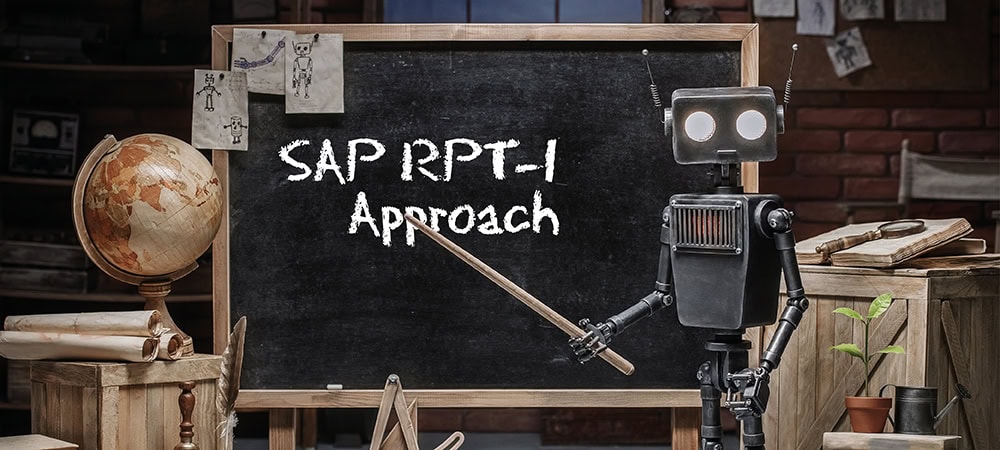
This technological development is taking on an even more explosive dimension with the current hype surrounding AI agents and agentic AI. While SAP is conjuring up a new era of autonomous process control with its digital assistant Joule and so-called Joule Agents, which are designed to handle complex tasks from procurement to finance independently, fundamental, unresolved questions of governance are emerging. These AI agents are no longer simple, deterministic RPA bots, but autonomous units that make decisions and execute actions in business-critical ERP systems based on probabilistic probabilities.
In the critical SAP community, there is therefore growing concern about a catastrophic loss of control: who is liable for the astronomical damage if an autonomous AI agent makes incorrect bookings, misroutes supply chains or even corrupts essential company data due to an unforeseeable hallucination of a large language model?
ERP Frankenstein architecture and Composable ERP
In addition, the unregulated use of agentic AI is increasing the architectural complexity to a veritable „Frankenstein architecture”, which even SAP board members have to warn against in order to justify their own product portfolio. In the hybrid IT reality of existing customers, in which systems such as Salesforce, Workday and ServiceNow operate with their own AI agents alongside SAP, there is a complete lack of overarching „rules of the road” for these autonomous agents.
If the AI agent of the CRM system collides with the agent of the ERP system, it remains completely unclear which system has the final authority over the end-to-end process. Instead of sorting out this impending AI chaos with a genuine, harmonized composable ERP with a clear control authority, the user is threatened with a dangerous patchwork quilt in which the company's sovereignty over its own data is crushed in the battle of the algorithms.


 DE
DE  EN
EN  ES
ES  FR
FR