From a Garage Project to a Billion-Dollar Business: The Rise of Open Source in the SAP Community




The roadmap from the heterogeneous AnyDB era—with databases such as Oracle, IBM DB2, and Microsoft SQL Server running on a wide variety of Unix and Windows systems—to consolidation on the in-memory database SAP HANA was one of the most far-reaching steps in the history of ERP. By mandating that HANA and the subsequent S/4HANA architectures may be run exclusively on the open-source Linux operating system, the ERP company SAP has fundamentally reorganized the IT landscapes of its existing customers worldwide.
This move by no means appears to be a gesture of goodwill toward the open-source community: SAP thereby drastically reduced the overwhelming complexity of varying operating system and database combinations, significantly simplified its own support operations, and increased margins in its maintenance business. At the same time, however, SAP opened the door to a global technical liberation for user companies, as Linux represents the undisputed spearhead of open-source innovation in the ERP landscape.
SAP Linux Lab Walldorf
At the forefront of this Linux revolution are two heavyweights in the enterprise open-source world, whose development work is inextricably linked to SAP’s history. The partnership with the European open-source pioneer SUSE—sealed in 1999 with the founding of the Linux Lab at SAP’s headquarters in Walldorf—laid the foundation for running business-critical enterprise software on an open-source basis. With an estimated market share of 80 to 85 percent for in-memory HANA installations, SUSE Linux Enterprise Server (SLES) for SAP Applications remains to this day the undisputed backbone and lifeline for the vast majority of the global HANA community (SoH, Suite on HANA, and SAP S/4 HANA).
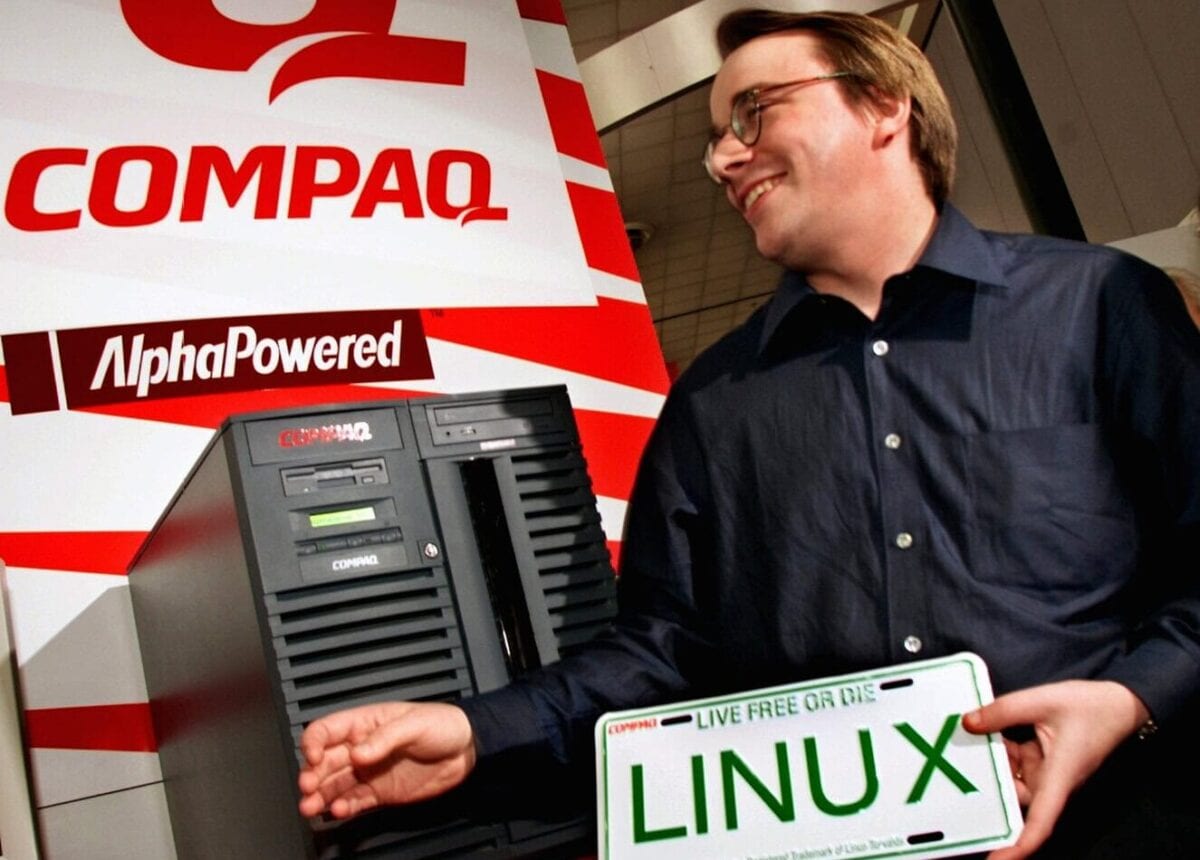
SAP has migrated large parts of its internal IT landscape, as well as the SAP Enterprise Cloud Services portfolio (Rise/Grow with SAP), to Red Hat Enterprise Linux (RHEL) as its standard infrastructure foundation. With their hardened enterprise distributions, SUSE and Red Hat provide precisely the stability, security, and vendor support commitments that are essential for Business Suite 7 and S/4.
For the Customer Center of Expertise (CCoE) and the base administration team at the customer company, the use of certified Enterprise Linux means much more than just providing computing capacity. Through specialized extensions such as the Pacemaker-based High Availability Extension (HAE), automated failover processes for HANA cluster systems, and uninterrupted kernel live patching, maintenance-related downtime is drastically minimized, bringing the organization significantly closer to its operational goal of uninterrupted, nonstop IT. In addition, BSI-certified security standards such as CC EAL 4+ and integrated SELinux meet the increased legal requirements of new European regulations such as NIS2 or the Cyber Resilience Act. As a direct response to the cost trap posed by established proprietary vendors such as VMware, SUSE offers SAP-certified KVM virtualization (Kernel-based Virtual Machine) on a subscription basis, a cost-effective, reliable alternative that eliminates the need for expensive third-party hypervisor licenses and prevents hardware lock-ins.
In the modern SAP environment, the role of open source is no longer limited to the operating system layer. In light of the vendor’s “Clean Core” doctrine, existing customers face the challenge of moving custom logic and extensions out of the S/4 core in order to maintain upgradeability. This is where open-source automation and container platforms prove to be the key enablers.
Enterprise Kubernetes
Tools such as the Red Hat Ansible Automation Platform or the open-source tool Salt enable end-to-end automation of complex system landscapes, from operating system deployment all the way to the application layer. At the architectural level, enterprise Kubernetes platforms such as Red Hat OpenShift or SUSE Rancher for SAP Applications provide a decoupled runtime environment for side-by-side extensions and containerized workloads—such as the business-critical SAP Edge Integration Cell (EIC). Based on the principle of „develop once, deploy anywhere,“ these open-source platforms create a hybrid bridge between on-premises data centers, private environments, and public cloud hyperscalers, without trapping users in isolated silos.
In a macroeconomic and geopolitical landscape shaped by trade conflicts, foreign access rights such as the U.S. Cloud Act, and the shift by manufacturers toward opaque cloud service agreements (Rise/Grow with SAP), open source is becoming an indispensable shield for the digital sovereignty of the European industrial sector. While SAP attempts to lock companies’ semantic knowledge within its own ecosystem through usage-based BTP credits, unpredictable AI token prices, and restrictive API policies, the open-source approach offers a robust exit and independence strategy.

„Successful Business Models in the Open-Source Environment—
”Software has been around since at least the early 2000s."
Peter Ganten,
CEO,
Univention
Thanks to sovereign European support models—such as SUSE Sovereign Premium Support, which stores data and employs staff exclusively within the European Union—sensitive data and support access remain under complete control. Even in the age of Agentic AI, newer developments such as SLES 16 rely on the open Model Context Protocol (MCP) and sovereign private AI frameworks (SUSE AI) to operate autonomous AI agents and language models without fees, in compliance with data protection regulations, and locally within your own data center. For existing SAP customers, Linux and open source are far more than just a technical operating system; they are the indispensable foundation for transitioning from being passively driven by the vendor’s cloud doctrine to becoming the self-determined architect of their own digital future architecture.
The breakthrough of open source didn’t happen overnight. Peter Ganten, CEO of Univention and chairman of the Open Source Business Alliance, traces its professionalization to the turn of the millennium. „Successful business models in the open-source software sector have existed since at least the early 2000s,“ he explains. He cites the introduction of enterprise subscriptions as a key milestone. „This proved for the first time that open-source software creates value even in the high-priced enterprise segment—value that companies and government agencies are willing to pay for.“
Freelance Developers
In the public eye, this shift took longer. Rico Barth, CEO of Kix Service Software, recalls: „For a long time, open source was associated with garage developers, freelance software enthusiasts, and the promise of significant cost savings.“ For Rico Barth, 2018 in particular marked a turning point: IBM announced the acquisition of Red Hat for approximately $34 billion, and SUSE was valued at just over $2.5 billion. „By then, at the latest, everyone understood that viable business models could be built on open source.“
Open source operates differently from the traditional licensing model in economic terms. It does not involve selling the exclusive right to use proprietary code. Instead, companies pay for stable enterprise versions, updates, support, certifications, integration, operation, or additional features. Nextcloud, for example, demonstrates that this approach allows for the rapid establishment of a successful operation. According to founder Frank Karlitschek, the company—founded in 2016—became profitable that very same year.

Rico Barth,
CEO,
Kix Service Software
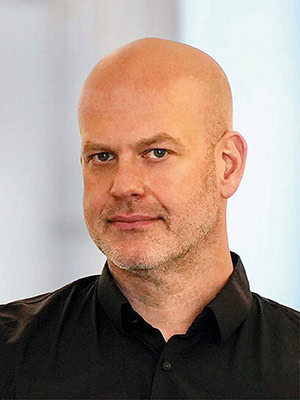
Frank Karlitschek,
Open-source developer,
Nextcloud

Sönke Liebau,
CPO and Co-Founder,
Stackable
However, the very openness on which this business model is based also presents challenges. One of them is that the code is not only available to the original developer. Major cloud providers can also market successful open-source projects as ready-made services—and, thanks to their reach and infrastructure, sometimes benefit from them more than the companies that originally initiated the development. Some vendors are responding to this with modified licenses or open-core models, in which only part of the software remains fully open-source.
Openness increases the pressure to innovate. Because software can be copied and services offered by others, open-source developers must continuously adapt their products and services to meet the needs of customers and the market. This is also the case at the Wedel-based company Stackable: „Our customers stay with us because they’re happy with us, they can rely on our support, and because they aren’t locked in by a license. The permanent option to leave is a major advantage,“ says co-founder and CPO Sönke Liebau. The business model must therefore remain viable even when the customer has the option to leave at any time.
Open does not mean unprotected
When it comes to security, one objection is particularly persistent: Open source code makes it especially easy for attackers to exploit vulnerabilities. After all, they can see how the software is structured. But it’s not just potential attackers who can examine the code—users, security researchers, and independent specialists can as well. „Open-source code does not guarantee security, but it does create an essential prerequisite for greater security,“ says Peter Ganten. Transparency, therefore, is not a shield, but rather enables independent scrutiny.
For Sönke Liebau, the 2024 attack on the XZ Library is a telling example: „Years of preparation by the attackers, uncovered by the community in a single weekend. I’d argue that it would have taken years to discover if the attackers had managed to inject the malicious code into proprietary software—if it had ever been found at all.“
The perspective has also shifted on the customer side. In the past, the focus was usually on getting the lowest possible price for a product; today, strategic considerations carry more weight. Torsten Hallmann, Open Source Ambassador at SUSE, explains the reasons. In his view, the strongest arguments in favor of an open-source product are: speed of innovation, resilience, and true freedom of choice. In the past, the primary concern was licensing costs. Today, the focus is on independence. This is because freedom of choice, in particular, is becoming increasingly important. Those who use open-source software can customize it, operate it themselves, or entrust it to a service provider. If a vendor goes out of business, changes its strategy, or raises prices, the technical foundation remains fundamentally available.

„The pace of innovation, resilience, and true freedom of choice.
In the past, the main concern was licensing costs. Today, the
”Focus on Independence."
Torsten Hallmann,
Head of Public Affairs,
Suse
And so the classic and dreaded vendor lock-in simply does not exist. Rico Barth describes precisely this ability—„to break free from dependence on a single manufacturer and, by extension, a monopolist“—as an advantage that has distinguished open source from the very beginning. „Today, this aspect is being recognized more and more in the debates about digital sovereignty and resilience. But of course, it also remains an economic issue. Anyone who ties themselves to a single provider in the long term makes themselves dependent on that provider’s prices, product strategy, and support. What seems convenient in the short term is a risk in the long term.“
Frank Karlitschek sums up the problem succinctly: „Most people overestimate the effort required for migration while underestimating the loss of autonomy.“ Organizations often renew existing contracts because a switch is perceived as riskier than remaining dependent. Yet migration by no means has to follow an „all-or-nothing“ approach. Individual workloads can be migrated incrementally and run in parallel for a time. Torsten Hallmann adds: „Hardly any organization today starts from scratch. The reality is that IT landscapes have evolved and are heterogeneous.“ Open source must therefore provide flexibility where software is already running. His conclusion: „True innovation expands options rather than limiting them.“
Between Sovereignty and AI
It is precisely this freedom of choice and action that makes open source a key component of digital sovereignty. Those who can review, modify, and operate software themselves—or have others further develop it—retain control over their infrastructure and data. Especially for government agencies and companies that process sensitive data, this independence thus becomes a strategic factor whose importance cannot be overstated.

And where is the open-source journey headed? Peter Ganten calls for „making open source—and open AI as well—the standard in all areas.“ AI, in particular, will reveal just how serious companies and government agencies are about digital sovereignty. Rico Barth sees control over models and data as particularly crucial in this regard: language models must be operated in „verified, trustworthy, and, where appropriate, local environments.“ In the coming years, open source could become a strategic foundation of digital infrastructure and increasingly supplant proprietary software.
Thirty-five years after Linux 0.01, an idea that initially excited developers above all has become an integral part of professional IT. Open-source software has given rise to a market—and technical freedom has become a strategic factor for businesses and government agencies. Open source has long since left the garage. What remains is a principle that has now become a business model in its own right: software can be extremely successful commercially even though—or precisely because—no single entity controls its code. (pmf)
 Deutsch
 English
 Español
 Français