
Transformation and resilience

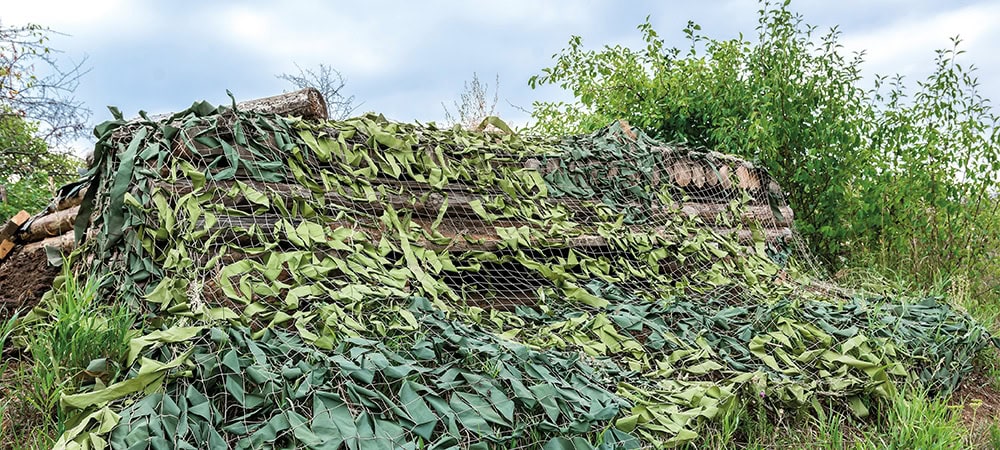
Increasing geopolitical tensions and the growing complexity of security-critical supply chains have drastically changed the demands placed on organizations in recent years, and not just in the areas of defence, homeland security and aerospace. Systems that have served reliably for decades are increasingly reaching their limits. They can neither meet the increased demands for speed, transparency and scalability, nor the high security standards that are absolutely essential in KRITIS-relevant industries.
Heeresinstandsetzungslogistik GmbH (HIL), a central service provider for the German Armed Forces, was confronted with precisely these challenges in the early 2020s. The company is responsible for the maintenance and operational readiness of large-scale military equipment. More than 3,000 employees at over 70 locations across Germany ensure logistical support for the armed forces.

As the global crisis scenarios grew, so did the number of maintenance orders, the variety of systems supported and the complexity of materials management. The existing SAP system - which originated from a member of the former consortium and was taken over in the early 2000s - was no longer able to shoulder this load. Processes had grown historically, were often paper-based and labor-intensive. At the same time, there was increasing pressure to process data not only faster, but also more securely. Cloud solutions were ruled out for security reasons. HIL needed an IT landscape that was modern, resilient, scalable and at the same time could be operated with uncompromising confidentiality - completely on-premises.
Looking to the future, it was clear that the company was facing a far-reaching transformation process. Forecasts predicted an increase in annual maintenance hours from 3.5 million to almost 6 million by 2031. Added to this was the expansion of the systems under management from 28,500 to almost 40,000 units. The workshops also had to react to this development: Multi-shift operation or structural expansions were on the cards. Without a stable, secure and process-optimized IT basis, this transformation would not have been manageable.
The balance between increased efficiency and the highest level of protection was particularly challenging. Confidential data on weapon systems and operational readiness required an architecture that adhered to the security guidelines of military organizations, minimized attack surfaces and at the same time left room for digital innovation.
S/4 Hana in the greenfield approach
Together with the Bremen-based SAP consultancy Abat, HIL decided to transform to SAP S/4 Hana on the basis of a greenfield approach. Instead of an evolutionary further development of the legacy system, the company deliberately opted for a fresh start. This made it possible to overcome outdated structures and redesign processes in line with modern best practices. The solution covers all core areas:
from Finance and Human Resources to Supply Chain and Service through to industry-specific enhancements for Defense & Security. Central Finance for financial processes, Extended Warehouse Management for warehouse logistics and SuccessFactors for future-proof HR management were of particular importance. The system was supplemented by the Business Technology Platform, which enables secure interfaces to mobile devices.
The Fiori First strategy, which provides intuitive interfaces and thus creates user acceptance, also played a key role. Today, maintenance records are made directly on the vehicle using mobile devices, completely replacing paper-based processes.
Controlled migration
A project of this size in a safety-critical environment requires particular care. That is why the roll-out was organized in waves. Regional groups of bases and one large plant each were gradually transferred to the new system, while the old systems continued to run in parallel. This double protection minimized the risk of failures. At the same time, IT security was anchored as a guideline in every phase.
The strict requirement that all data must remain on-premises required customized solutions for scalability and redundancy. Thanks to the expertise of specialized security teams, it was possible to create an architecture that meets both confidentiality-critical requirements and modern integration needs. Mobile devices, for example, are connected via the Business Technology Platform in a way that takes both security and user-friendliness into account.
Transformation and cultural change
Transformation in a security-relevant area means not only technological but also organizational change. For HIL, this was associated with a realignment of its working methods. Historically grown processes, which were often characterized by paper forms and manual recording, were replaced by digital, standardized processes. Recording working times directly on the vehicle, transparent storage location management and automated cost control are examples of how profoundly daily work has changed.
The topic of resilience played a central role here: processes had to be designed in such a way that they could continue to run stably even under difficult conditions - for example in the event of supply bottlenecks or staff shortages. Today, the introduction of order-related procurement processes and precise inventory controls prevents surpluses, bottlenecks and unnecessary search times.
Guiding principle of confidentiality
A particular success factor was the close cooperation between HIL's specialist departments and Abat's consultants. In addition to technological knowledge, an understanding of the importance of confidentiality was crucial. Compliance training courses were held right at the start of the project to ensure that everyone involved was trained in handling sensitive information.
Trust is a currency, especially in safety-critical projects. The ability to bring in highly qualified experts at short notice when personnel bottlenecks arose showed how important flexibility and reliability are in partnerships of this kind. This ability to deliver not only technology, but also security and integrity, makes the difference for the success of such transformation projects.
Today, HIL has a modern, robust and future-proof IT landscape. Processes are standardized, digitalized and secure. Mobile devices record working times and findings directly on site. Spare parts are managed precisely, orders are triggered by the system and costs are monitored transparently. Search times have been massively reduced, while the resilience of the entire organization has been strengthened.
This project offers valuable insights for sectors such as aerospace, homeland security and other companies in the KRITIS environment: It shows that transformation is also possible in environments where the highest standards of confidentiality and resilience apply. The decisive factors are the courage to make a fresh start, close cooperation with specialized partners and the willingness to consistently modernize processes.
HIL has proven that a digital reorientation does not have to be at odds with maximum security. Rather, a robust, modern and secure IT architecture can become the basis for operational strength, flexibility and future viability - a model that shines far beyond the defense sector and serves as a blueprint for transformation in all safety-critical industries.
Conclusion
AI and large language models have the potential to fundamentally transform financial planning and consolidation. However, the prerequisite for this is that they are implemented in a structured, targeted manner and with specialist expertise. The real added value does not come from technology alone, but from the intelligent combination of LLMs, business processes and company-specific requirements. Concepts such as agent mode and the Model Context Protocol show how AI can go beyond simple automation. If you want to exploit the full potential, you not only need modern tools, but also new ways of thinking and strong partners at your side.
Continue to the partner entry:



 DE
DE  EN
EN  ES
ES  FR
FR