
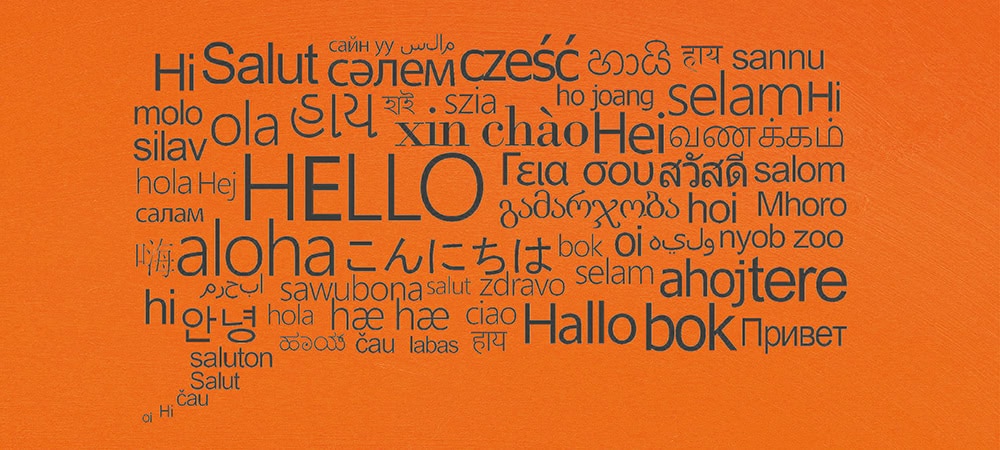
Finding a common language



The SAP Business Data Cloud is far more than just a new label for familiar tools. It is a serious attempt to overcome fragmentation in the corporate data world. As a fully managed SaaS solution, SAP BDC offers a central, powerful platform for managing and analyzing company data.
Integration of SAP and non-SAP
With its seamless integration of SAP and non-SAP data, it sets new standards for data-driven companies, including AI support and process automation. It combines all the powerful functions of SAP Datasphere, SAP Analytics Cloud, SAP Business Warehouse, SAP Databricks, Snowflake and Microsoft. There are also numerous data products for business users. The SaaS offering combines established tools such as Datasphere or the SAP Analytics Cloud with new components such as a central object store or Databricks integration to create a genuine ecosystem. You can think of it like an orchestra: the instruments are familiar, but together they play a completely new symphony. The game changer is the integration with Databricks. This blurs the boundaries between the SAP departments and the data science teams. Instead of separate silos, everyone now works on a uniform data layer.

Another advantage is that SAP and non-SAP data can be merged into a standardized, semantically consistent database. This creates a consistent view of all business-relevant information, regardless of its original source. The BDC therefore already offers great potential. It reliably consolidates all company data in one place, makes it consumable through intelligent applications and dashboards and supports companies in the digitalization and optimization of their data strategy. In the long term, SAP BDC reduces integration costs. Companies need to maintain fewer external data lakes, which not only reduces complexity, but can also lead to a sustainably lower total cost of ownership (TCO).
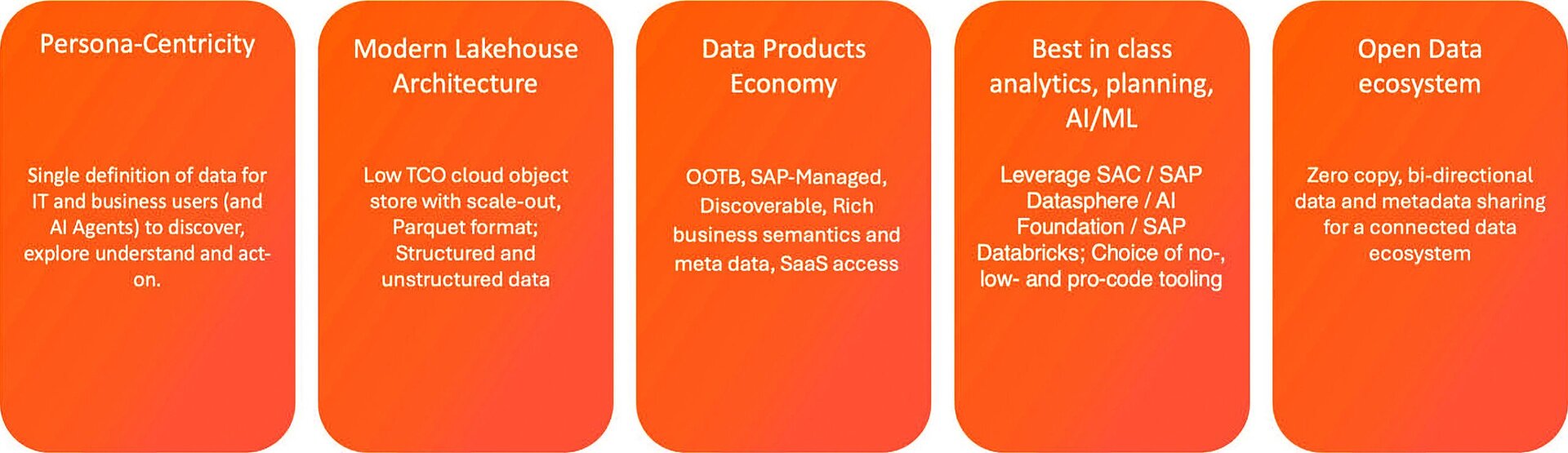
SAP is also opening up technologically to non-SAP users via Snowflake, Databricks and the data product studio. With so many new solutions, platforms and roles, a common language is becoming increasingly important. Walls that have formed must disappear. Because non-SAP data scientists can now also use the SAP platform. BDC uses intelligent applications to create added value for managers in every line of business, for finance, procurement, people and supply chain intelligence.
Data is the most important fuel for a company and its business processes. The fundamental component of successful business decisions is therefore to have harmonized, i.e. clean, complete, contextual, usable and up-to-date data available at all times. This is exactly what the BDC provides, complemented by role-based, smart applications and analytical dashboards for real-time insights.
The SAP Business Data Cloud stands out from other data and analysis solutions due to the following features, among others:
- Pre-configured intelligent applications for advanced analytics and planning across all business areas to deliver transformative insights.
- Access to curated, SAP-managed data products for key business processes, with business context and semantics intact and fully controlled.
- Harmonization of all SAP and third-party data with fully managed functions for a business data fabric architecture, modernization of SAP Business Warehouse, planning, data engineering and AI/ML.
- SAP Databricks for per-code development of AI, machine learning and data engineering tasks.
SAP is becoming increasingly open and expanding its data ecosystem through the strategic development of the BDC. This was most recently demonstrated at SAP TechEd 2025
once again in Berlin. Milestones to date include the partnerships with Databricks, Google Clouds BigQuery, Microsoft and the latest reinforcement Snowflake, which enable bidirectional data exchange without copying („zero copy“) between the platforms and the BDC. According to SAP, however, this is just the beginning. Further integrations are planned, it was reported at TechEd 2025 in Berlin, even if no further names have yet been mentioned.
SAP user companies should already be dealing with the challenges today and realize that the introduction of BDC not only means a technological change, but also an organizational one. What is needed in the future is a new mindset for dealing with data. What is new? While the responsibility for data products was previously primarily located in the IT department and data was kept in silos, the specialist departments also have a decisive role to play when working together on the BDC. In addition, new stakeholders are joining the table, taking direct ownership of the development and use of data products and filling corresponding roles.
Shared mindset
This often requires a new mindset when it comes to managing and analyzing their data. With Snowflake, Databricks, Partner Connect, Microsoft and the Data Product Studio, SAP is also opening up to non-SAP users. Non-SAP data scientists and citizen developers can now also use the SAP platform. In addition, there are new roles such as prompt engineers and AI developers, whose areas of responsibility and boundaries must be defined before the BDC can be used to create added value. It is therefore very important to consistently break down walls and communication barriers and develop a common language. This is the only way to leverage the enormous potential of the BDC and implement it with the greatest possible business benefit.
The new BDC toolset, which will continue to grow in the future, requires a new mindset, especially from SAP employees and managers in the user companies. It is not just a technological change, but above all an organizational one. It is therefore important to pick up the business departments that provide the data product owners, not just IT as has been the case to date. Business departments and IT need to sit down together and pull in the same direction. Only by using a common language can all stakeholders jointly generate maximum benefit with the BDC. Then the SAP and non-SAP worlds will really grow together.
Continue to the partner entry:




 DE
DE  EN
EN  ES
ES  FR
FR