
SAP Custom Code rethought





In many large SAP system landscapes, an extensive, often poorly documented stock of custom code has accumulated over the years. What was originally useful for fast process coverage and closing SAP gaps is now an expensive technical legacy: in highly individualized ECC environments, up to 80 percent of the code base consists of customer-specific extensions - of which, according to surveys by SAP and others, 60 to 80 percent are no longer used.
S/4 migration incompletely solved
Nova Intelligence is an agent-based AI platform that was developed specifically for SAP. In view of the 2030 migration deadline, S/4 migration is currently one of the most urgent areas of application - and with Cleanfield, Nova has established a new migration method made possible by the Nova AI platform, which breaks new ground in contrast to Brownfield and Greenfield in terms of both technical implementation and business results. Cleanfield combines the pragmatic advantages of a brownfield approach with the architectural advantages of a greenfield target image. The existing landscape is neither simply adopted nor discarded across the board. Instead, the legacy solution is systematically analyzed, the business-relevant logic is reconstructed, unnecessary custom code is consistently eliminated and the SAP standard is used to the maximum. Only the truly differentiating part of the existing customer-specific enhancements is rebuilt in a modern S/4 target architecture in accordance with Clean Core. The central point that makes the difference to the heavily consulting and personal migrations in the brownfield and greenfield approach lies in the cost structure: the Nova Intelligence platform is offered on the basis of an annual platform fee plus a per-seat component. The usage fees are therefore decoupled from the number of analyzed, modernized or newly developed custom code objects - in short: the more intensive the usage, the higher the return on investment (ROI).
Initial reports from Nova Intelligence customers are convincing - even beyond the pure ROI consideration. Customers report task-specific productivity increases by a factor of 4 or more compared to conventional approaches. Concrete practical examples prove the effectiveness of the platform: at Festo, the use of Nova Intelligence resulted in efficiency gains of 50 to 90 percent. The Kion Group was able to reduce the system runtime of cleaned-up Abap applications from 25 minutes to two to three minutes and shorten the custom code analysis phase from one to two weeks to two to four days.
Festo use case
Initial testimonials from Nova Intelligence customers are convincing. „If I had had Nova Intelligence at my disposal earlier, I would have done S/4 Hana migrations differently. It will probably be a game changer for us if the findings from the proof of concept are confirmed in further use,“ says Jörn Weigle, CIO at Festo. Festo, an over 100-year-old manufacturer of control and automation technology based in Esslingen, Germany, with over 20,000 employees in more than 60 countries and an annual turnover of around 3.5 billion euros, has been migrating to S/4 Hana since October 2024, largely without external support, and is currently using an on-premises deployment model. Over the years, up to 140,000 individual objects and tables have accumulated in the legacy world. According to SAP's count, there were 5800 system-relevant modifications (whereby SAP also includes simple color changes in the GUI, for example); according to Festo's count, there were around 1800 system-relevant code modifications.

"There were no reservations on the part of the developers involved, quite the opposite: the team is convinced by the platform because it frees up resources for other, more urgent tasks.“
Jörn Weigle,
CIO,
Festo
Four release changes per year are currently possible in this environment; this is to be increased to at least ten updates per year, accompanied by more intensive test automation. To this end, the existing custom code was previously analysed with Smart-shift, compared with the SAP standard and optimized in certain areas.

Festo has been using the Nova Intelligence platform since mid-2025. An initial test run with a moderately complex modification was a success. Experienced SAP developers at Festo estimated the processing time with the tools used to date at around five weeks. After two weeks, the Nova Intelligence platform had produced clean-core-compliant code that also met all security and governance requirements. The bottom line was faster and higher quality. Festo puts the efficiency gain at between 50 percent and 90 percent. Since then, the company has been working on refactoring the remaining code with the help of Nova Intelligence. „The special feature of the Nova Intelligence platform is its consistent focus on SAP. The Nova Intelligence team is familiar with SAP architecture, technology and interfaces and combines this knowledge with the AI excellence of Silicon Valley. This is reflected in the quality and efficiency of the code refactoring,“ adds Weigle.
Use case Kion Group
The Kion Group confirms the positive impressions. „We are pursuing a clear clean-core approach with a central S/4 installation. Kion has migrated to S/4 Hana using a greenfield approach and has reorganized and documented the entire process landscape in detail as part of the business transformation,“ says Carsten Engelbrecht, describing the requirements.
The Kion Group is a leading international provider of intralogistics solutions with over 100 foreign subsidiaries and around 42,000 employees. The company, which emerged from Linde, generated sales of around 11.3 billion euros in 2025 with brands such as Linde, Still and Dematic. The Group has already reorganized its entire process landscape as part of the S/4 Hana migration. The new target environment provides for a central S/4 Hana system for all branches worldwide, which is operated according to the clean core principle. All necessary Kion-specific extensions are developed and integrated outside the core on SAP BTP. In principle, no custom code was transferred from the Kion Group's ECC environment to the S/4 Hana world. Only selected enhancements that were urgently required by the specialist departments and could not be redeveloped in a clean-core-compliant manner in time were transferred.

"There are two main requirements that we have implemented with the Nova Intelligence platform: to operate genuine clean-core compliant systems and to ensure a high level of performance.“
Carsten Engelbrecht,
Executive Vice President (CIO),
Kion Group
The Nova Intelligence platform was only used after the S/4 Hana migration had been completed; it was not available beforehand. The main application is to optimize existing legacy code and reduce the sometimes high consumption of system resources. For example, the system runtime of an Abap application for the comprehensive processing of a sales order for a vehicle was up to 25 minutes, depending on the system load. Using the Nova Intelligence platform, the processing time was reduced to two to three minutes.
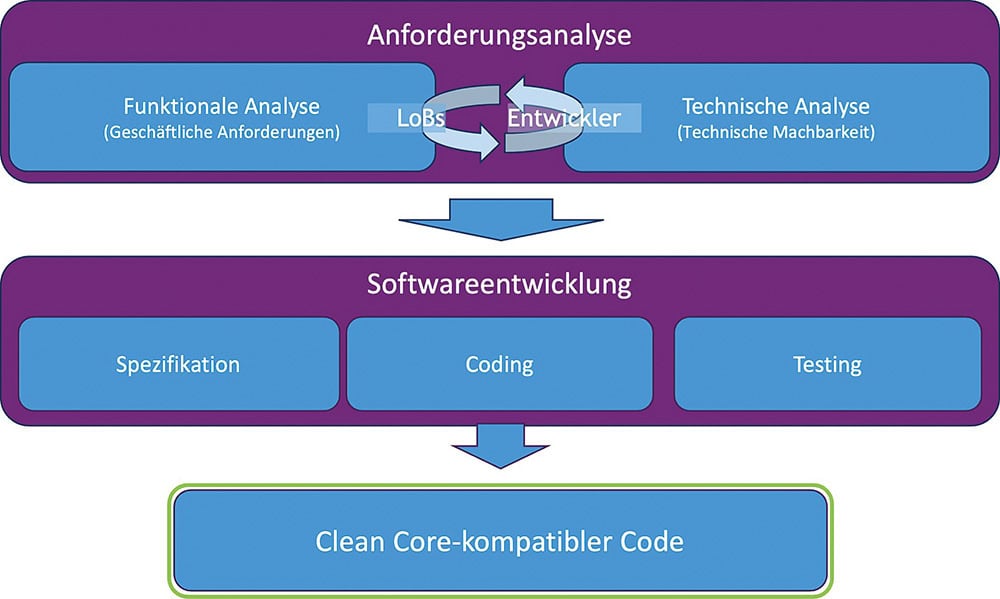
In addition, the analysis phase of the legacy code was largely automated. The Nova Intelligence platform records the execution logic of the Abap code and designs new, clean-core-compliant code based on this. This is then checked by the Kion developers and transferred to the test. Depending on the scope of the code, experienced developers usually needed one to two weeks for such code analyses. With the Nova Intelligence platform, this effort is reduced to two to four days, depending on the duration of the test phase. „We plan to continue using Nova Intelligence in software development in the future, and we expect to benefit greatly from the platform's prompting capabilities in requirements management,“ emphasizes Engelbrecht. „Normally, requirements gathering takes up to 60 percent of the time in development projects because specialist departments and developers have a different understanding of the subject matter. We expect to be able to significantly reduce this process so that we can further relieve our top developers. But we are still at the very beginning here.“
The cleanfield approach based on the Nova Intelligence platform thus solves one of the most pressing problems that almost all SAP customers have, because it not only addresses the migration phase but, as a lifecycle-centered platform, guarantees permanent clean core conformity and constant alignment with the SAP standard for all customer-specific developments.
Customized Knowledge DB
A particular differentiating feature is the continuous expansion of the customer-specific knowledge database based on the use of agent-based AI. This significantly increases the precision of the analyses and supports well-founded architecture decisions - a unique addition to code remediation from PAC's point of view. This makes Nova Intelligence a key lever for efficiency and quality throughout the entire SAP custom code lifecycle.
ROI analysis from PAC
PAC has prepared ROI analyses for three different deployment scenarios for the Nova Intelligence platform:
Scenario 1: Code cleanup during the S/4 Hana migration: The first scenario affects the majority of current SAP customers in Germany, i.e. all those who have not yet migrated to S/4 Hana. Typically, the old ECC landscape has been modified many times and the custom code has little or no documentation. In this environment, the Nova Intelligence platform analyzes the complete custom code inventory for dependencies and usage intensity. It is usually found that a significant proportion no longer delivers any relevant business value or can already be covered by standard SAP functions. Based on this analysis, the code is systematically eliminated or transferred to the S/4 Hana standard. Modifications are only transferred to clean-core-compliant code where differentiation is required.
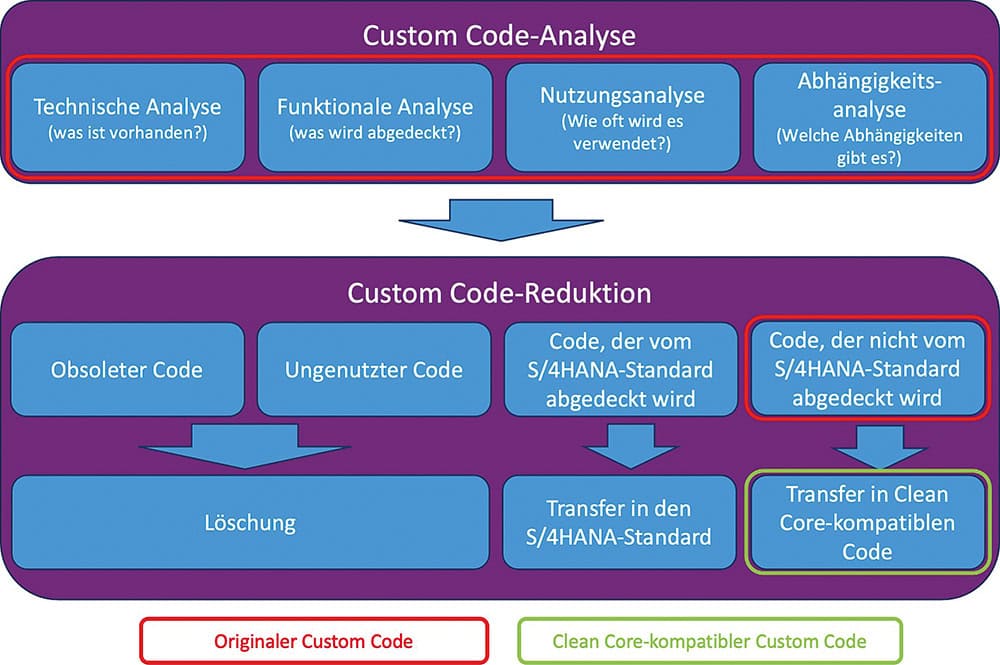
The result: an S/4 Hana system that is lean, standards-compliant and upgradeable right from the start - without losing any business-relevant features. Our model ROI analysis for this process shows that Nova Intelligence delivers a clearly measurable, significant ROI for 1000, 10,000 and 100,000 customer-specific code objects respectively by reducing transformation efforts, shortening modernization times and significantly reducing the lifecycle costs of custom code landscapes.
Scenario 2: Code modernization in S/4 target environment after migration: The second use case concerns companies that are already working on SAP S/4 Hana. In many of these landscapes, most of the custom code from ECC times has been technically migrated. In addition, after the S/4 Hana go-live, further enhancements are created to close functional gaps or implement new requirements without aligning them with SAP's clean core requirements or comparing them with the SAP standard. The Nova Intelligence platform creates transparency across the entire custom code inventory, resulting in a differentiated picture with reference to the customer's target architecture. The platform translates the strategic objectives into concrete priorities: Which extensions can be tolerated, which need to be adapted in the medium term, which pose a risk and must be redeveloped to be clean-core compliant?
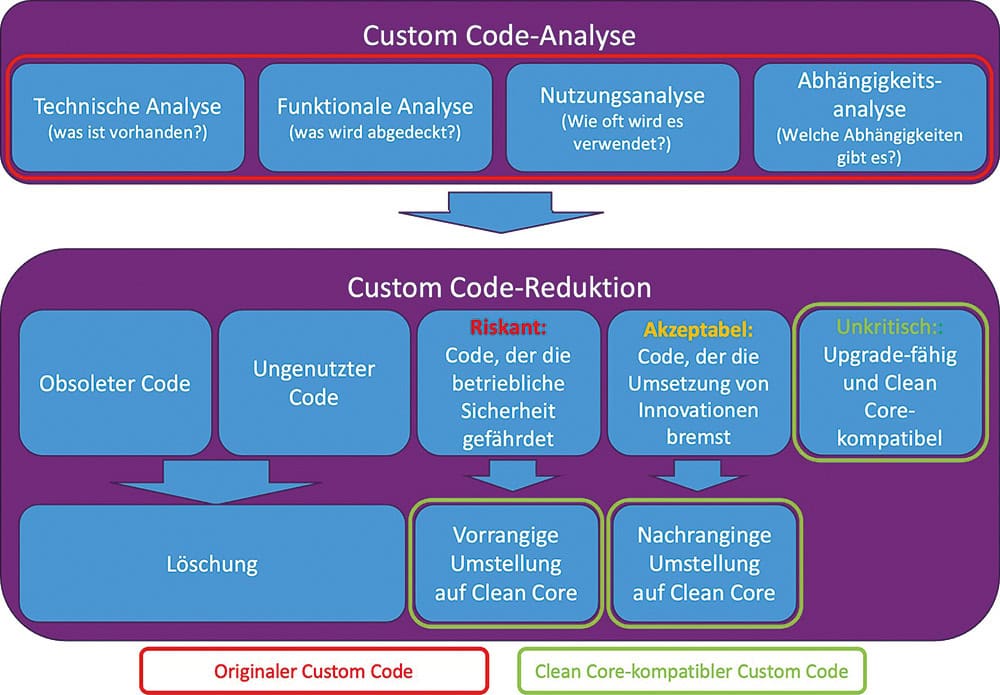
CIOs and SAP managers can thus actively manage their custom code inventory instead of just reacting to problems. Over time, the landscape can be systematically developed towards a more stable, cost-efficient target image. In our model ROI analysis, in addition to the framework conditions mentioned above, the effects on the IT infrastructure were also analyzed, for example in terms of server capacities, energy consumption and associated operating costs, in order to identify further savings potential. As a result, we calculate an even higher ROI value for 1000, 10,000 and 100,000 customer-specific code objects respectively. The analysis proves that Nova Intelligence achieves a significant ROI by significantly reducing modernization efforts and lifecycle costs of custom code landscapes.
Scenario 3: Continuous further development of the S/4 Hana environment: Ideally, the S/4 Hana environment reaches a status at a certain point in time where legacy code has been completely eliminated or cleaned up. In this environment, enhancements are usually formulated by specialist departments and implemented by software developers in an iterative process. This results in many rounds of coordination in the requirement process as well as frequent functional improvements. In this scenario, the Nova Intelligence platform covers the entire lifecycle of the software development process. The Agentic AI Platform generates SAP code directly in the connected SAP systems (primarily in SAP development systems), tests these developments and then transfers them to the respective QA/test systems via the connected SAP transport system. Once testing is complete, the enhancements can then be transferred to the SAP production system. The platform is deliberately not project-based, but lifecycle-oriented. It addresses not only the one-off transformation of a system, but all work steps that occur over the years when developing, operating, optimizing and further developing an SAP landscape. PAC's ROI analysis shows that Nova Intelligence generates a significant ROI for 1000, 10,000 and 100,000 custom code objects respectively by increasing developer productivity, shortening development cycles and sustainably optimizing the long-term lifecycle costs of custom code solutions. Due to the platform economy, the processing capacity scales thanks to the parallelization of the agents. As a result, the ROI increases logarithmically the more custom code objects have to be generated.
Overall, the analyses show a significant correlation between the number of custom code objects to be modernized or newly developed and the ROI achieved by the Nova platform, which is consistent with its primary value driver, the scaling of efficiency gains in code transformation and development.
Combination of scenarios
On this basis, we have defined two central use cases that combine the above scenarios:
First: the combination of the modernization of custom code as part of a transformation from ECC to S/4 and the parallel new development of custom code with the Nova Intelligence platform.
Second: the combination of the modernization of custom code in an existing S/4 environment, including additional savings in hardware, energy and infrastructure costs, and the new development of custom code, also supported by Nova Intelligence.
The combination of these scenarios in the ROI analysis is methodologically justified, as the platform's pricing model is usage-independent and customers can carry out both modernization and development in parallel without additional costs. Assuming 1000, 10,000 or 100,000 custom code objects to be modernized and 1000, 10,000 or 100,000 new custom code objects to be developed, the model calculation for both use cases results in an ROI of around 220%, 310% and 1400% for 1000, 10,000 and 100,000 customer-specific code objects respectively, which clearly demonstrates the considerable economic leverage of the platform with increasing scaling of custom code volumes.
ROI analysis from PAC
PAC's ROI analyses are based on the following assumptions:
Platform costs: The platform is offered on the basis of an annual platform fee plus a per-seat component. However, performance is not scaled via additional user accounts, but primarily via the parallel use of AI agents per user, which can process tasks at least ten times simultaneously. This increases the overall processing capacity much more efficiently. Accordingly, the number of users only grows moderately, while even large volumes of work can be processed reliably and efficiently with a comparatively small user base.
Scope: The costs of modernizing or developing 1000, 10,000 and 100,000 customer-specific code objects with and without the Nova Intelligence platform were compared. In practice, several objects are often combined as part of projects, for example to support a workflow.
Categorization: Each property was assigned to one of four categories (decommissioning, compatible, adaptation, new development).
Complexity profile: We have defined three levels of complexity: simple (60 percent of modifications fall into this category), medium (32 percent) and complex (8 percent).
Time frame: The analysis took into account modernization, operating and maintenance costs over five years.
Financial benefit: The financial benefit was calculated as the net present value of all savings.
Efficiency: From discussions with customers, we assume that Nova Intelligence will increase the proportion of codes that are easy to migrate or decommission, thereby reducing the total cost of ownership.
PAC Commentary
The challenge of combining individual expansion requirements with the principles of clean core and standard proximity will be a constant challenge for companies. A modern platform that supports the modernization of custom code and continuous alignment with the SAP standard is therefore essential. Nova Intelligence offers a convincing solution for this by combining in-depth SAP expertise with innovative Agentic AI technology and thus creating sustainable added value. Our ROI calculations impressively demonstrate the sustainable value of the platform over the entire lifecycle of SAP-centric software development. The cleanfield approach of the Nova Intelligence platform ensures that the S/4 target environment remains permanently compliant with the Clean Core and the SAP standard. This lays an essential foundation for keeping the SAP environment open for AI and agent-based innovations of the future in the long term.

To the partner entry:


 DE
DE  EN
EN  ES
ES  FR
FR